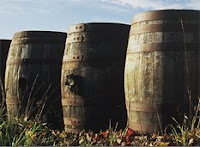
Showing posts with label whisky casks. Show all posts

Wednesday, December 6, 2017

Life After Whisky - What Happens To A Cask?


Ever wondered what happens to all of those old whisky casks?

A recent event in London that I attended saw a whisky company collaborate with a bicycle manufacturer to produce something extraordinary from used whisky barrels. It got me thinking about some of the innovation that is going on in the whisky industry.

But what normally happens to a wooden cask once its days of maturing whisky are finished? What do people do with them? The answer is different in different places.

Tuesday, August 9, 2016

Visit - The Speyside Cooperage


The Speyside Cooperage is located on the outskirts of Craigellachie, just off the main road between the village and Dufftown in the heart of Speyside.  It is the largest independent cooperage in the UK and the only one with a visitor centre.  This won a prestigious Icons of Whisky award in 2011 for Visitor Attraction of the Year and includes a gift shop, cafe and small cinema.  Many times we have sped passed and contemplated a visit, but on a recent press trip there were finally a couple of hours free to pop in.

Tuesday, March 8, 2016

The Wood Makes The Whisky - The Concept


Last Autumn, the leading Scottish independent bottling company of Gordon & MacPhail launched a new campaign to show the importance of casks in the whisky maturation process - The Wood Makes The Whisky.  It highlights the most important part of their business and is supported by a dedicated website and a selected number of whiskies, which have been bottled to demonstrate the various sections within the campaign.

Wednesday, June 3, 2009

Explain about ... The influence of wood on whisky

whisky casksMany types of wood have been used to make whisky casks during the history of the industry. Now, by law they now must be constructed of oak. Oak is selected for its toughness yet is easy for the cooper (the people who make casks) to work with, has tight grain that prevents leaking, is porous that allows oxygen in and out of the cask and it can be bent by heat without splitting.

Wood (and especially oak) is full of naturally occurring oils called vanillins. These oils are drawn out of the cask by the spirit during maturation and they add to the whisky’s flavour profile. So if all whisky is matured in oak casks, how can they all be different when tasted? The character of the distillery, the ingredients used, the size and shape of the stills and its location are all important but the major factor is the type of oak cask used for maturation. Between 60-80% of a whisky's flavour can come from the cask. There are three main types of wood used by the whisky industry.

European oak (Latin name Quercus robur)
This type of oak has traditionally been used to mature whisky in Scotland and Ireland for nearly two centuries. Until the 1860s, oak from England and Scotland had been used to mature whisky but these casks were particularly prone to leaking. Russian oak was then imported that was stronger and less porous but this was expensive. When the Spanish started sending their sherry over to the UK in the 1860s, the casks used for maturation and transportation were made from Spanish oak. They had similar properties to Russian oak but were much cheaper. This oak is traditionally grown in the Galicia region of northern Spain and although the sherry industry has declined since the 1970s, Spanish oak is still commonly used and sought after. This is despite the price of a sherry cask currently costing nearly 10 times as much as a bourbon American oak cask.

The other type of European oak commonly used in modern whisky maturation is French oak. This is traditionally made into casks for the wine industry and these are mostly used by distilleries to give a different ‘finish’ to their whiskies.

Flavour key words - sherry, dried fruits - sultanas, raisins, candied peel, spices - cinnamon, nutmeg, wood, caramel, orange, Christmas cake.

American oak (Quercus alba)
This has been used in the whisky industry since the end of the Second World War. At that time, the Cooper's Union and lawyers formulated the law that stipulated that all American whiskey had to be matured in new wooden casks. This was done to boost the coopering industry that had collapsed during Prohibition in the 1920s and 30s. As a result, there was a massive increase in the number of casks available. The American bourbon whiskey industry slowly recovered from Prohibition and the Scots and Irish began using their casks for maturation. This was due to the good availability and price of bourbon casks compared to the more traditional sherry casks, whose numbers were declining and becoming more expensive.

American oak is seen as perfect for whisky cask construction as the trees are fast growing with tall straight trunks, giving good quality wood and high levels of vanillins. The size of cask produced (known as an ASB - American Standard Barrel) is also considered to mature whiskey at the optimum rate as there is the perfect ratio between the amount of liquid and the surface area of the inside of the cask. The result of this is that nearly 90% of all the world's whisky is now matured in American oak bourbon casks.

Flavour key words - vanilla, honey, nuts - coconut, almonds, hazelnuts, butterscotch, fudge, spices - ginger.

Japanese oak (Quercus mongolica)
Also known as mizunara oak, this type of wood is used in the Japanese whisky industry. Mizunara has been used since the 1930s and gives the whisky a unique set of flavours. The wood has extremely high levels of vanillins but is soft and very porous, making the casks made from mizunara oak very prone to leaking and easily damaged. As a result, the practice of maturing whisky was modified in order to reduce these factors. Now most Japanese whisky is matured in either bourbon or sherry casks and then transferred to mizunara casks to gain its flavoursome characteristics.

Flavour key words - vanilla, honey, floral - blossom, fresh fruit - pears, apples, spice - nutmeg, cloves, wood.

Tuesday, May 19, 2009

Explain about ... Whisky cask types and sizes

When you buy a bottle of whisky it may state the type of cask or barrel that has been used during maturation on the label. This is especially likely on an independent bottling company’s label. But what does the type and size of the cask really tell us? The most basic thing to remember is that the smaller the cask, the more contact the whisky inside has with the wood. It can be very confusing if you are not sure of the terms, so we have compiled a quick guide to the ten main types of cask used within the whisky industry, starting with the largest.

Gorda (capacity 700 litres)
A huge barrel used originally in the American whiskey industry. Made from American oak, they are occasionally used for maturing whisky but mostly for the marrying of different whiskies for blended or vatted whisky production.

Madeira Drum (650 litres)
A short, fat, dumpy barrel with a very wide diameter, made from very thick staves of French oak. As the name suggests, these drums are used in the Madeira wine industry and are occasionally used for finishing some whiskies.

Port Pipe (650 litres)
This is a tall, thin barrel made from thick staves of European oak. It looks like a regular barrel that has been stretched from each end. They are used to mature Port wine and are used in the whisky industry for finishing.

Butt (500 litres)
A tall, narrow cask made from thick staves of European oak and they are widely used throughout the sherry industry in Spain. Butts are the most common type of sherry casks used by the whisky industry.

Puncheon (500 litres)
There are two styles of puncheon cask. The most common is the ‘machine puncheon’, which is short, fat and made from thick staves of American oak. The second is the ‘sherry shape puncheon’, which is more elongated and made with thinner staves of Spanish oak. They are used in the rum and sherry industries respectively and are mostly used to finish whisky.

Barrique (300 litres)
These are the casks that are widely used throughout the wine industry. They differ from many other types of casks or barrels as they are bound with wood strips rather than the regular metal hoops. Used to give whisky a ‘wine cask finish’.

Hogshead (225 litres)
The word hogshead derives from the 15th century English term ‘hogges hede’, which referred to a unit of measurement equivalent to 63 gallons. Now made from American white oak, hogsheads are widely used for maturing bourbon and then sent to Scotland and Ireland. They are one of the most common types of cask used for maturing whisky.

ASB (200 litres)
The ASB (American Standard Barrel) is derived from the hogshead with the capacity rounded down to 200 litres for modern ease of use. Made from American white oak, they are widely used in the bourbon industry and then are very commonly used in Scottish and Irish whisky maturation. If you have a bourbon cask matured whisky, it will almost certainly have been matured in a hogshead or ASB.

Quarter Cask (50 litres)
A cask made to be a quarter of the size of an ASB, while remaining in proportion. Highly reactive with spirits as there is so much contact between the spirit and the wood. Used to give whisky flavour quickly. Also known as a ‘firkin’ by brewers.

Blood tub (40 litres)
A small cask used mostly in brewing beer, but very occasionally used by distilleries to mature special runs of whisky. They have an elongated oval shape that was designed to make them easy to carry on horseback.

Wednesday, May 13, 2009

Explain about ... Coopering - the art of making whisky casks

whisky casksThe art of making whisky casks is a highly skilled and traditional practice called coopering. Nowadays, modern machinery aids the cooper (the name given to someone who makes casks and barrels) but it still takes years of training to reach the required industry standards. But how are these casks made? Here we will go through the process of this dying craft.

• Oak trees are only cut down when they have reached sufficient maturity. This is when the tree is roughly 7.5 metres (25 feet) tall and 1 metre (3 feet) in diameter.

• The trunks are transferred to a sawmill. Here they are sawn into planks from which the correct length of stave are cut. A stave is a small plank with a sophisticated curved surface that links together to form a circular barrel.

• Traditionally a cask is formed of 32 staves with 15 more being used to seal the ends.

• In order to bend the staves to the correct shape, they are exposed to fire. Also, most bourbon distilleries in America deliberately char the inside of the casks as a common practice. This is done to help with the penetration of the spirit into the wood.

• A cooper planes down the staves so that they fit together tightly without leaking. This is done naturally without the use of nails or any glue and the staves are held securely in place by metal hoops.

• Wood is a porous material and the distillers want the whisky to interact with the air. Therefore, no varnish or paints are used on the casks to allow the wood to ‘breathe’.

• A hole is then drilled in the side in order to allow easy checking on the progress of the whisky’s maturation and final emptying.