Showing posts with label bourbon. Show all posts

Monday, October 14, 2024

Review | Wild Turkey Jimmy Russell's 70th Anniversary 8 years old


The American bourbon brand of Wild Turkey has released a special commemorative whiskey to celebrate the remarkable career of Jimmy Russell, the long-serving Master Distiller. This year marks the 70th anniversary since Russell began working at the distillery in Lawrenceburg, Kentucky on September 10 1954. His remarkable career includes establishing Wild Turkey as a global brand and being inducted into the Bourbon Hall of Fame. 

The Wild Turkey Jimmy Russell's 70th Anniversary 8 years old features whiskeys of 8- and 9-years of age that were hand-selected by son Eddie Russell and grandson Bruce Russell, who both work at the distillery in senior positions, from Jimmy's favourite rickhouses. 

Tuesday, January 9, 2024

Review | Never Say Die


Never Say Die is a small batch bourbon but with a difference. The whiskey is distilled at an unnamed distillery in Kentucky via column stills and matured in the USA for a period, before being shipped in barrel to the United Kingdom where it undergoes a secondary maturation. As it travels via the sea the whiskey is moved around inside the barrel at an increased rate and this adds an extra dimension of taste and character.

Thursday, November 9, 2023

Review | Maker's Mark Cellar Aged


The wheated American whisky brand of Maker's Mark has debuted the inaugural bottling of its Cellar Aged expression. The whisky is planned to be an annual small batched release going forward. For this expression Rob Samuels, 8th generation whisky maker and grandson of the brand's founder, has taken regular Maker's Mark (which is aged for just over six years on average) and then placed the casks in a purpose built limestone cellar for an further extended maturation period. 

Wednesday, April 13, 2022

Review / Kentucky Owl 'The Wiseman'

The Wiseman is a premium American bourbon from the brand of Kentucky Owl. The expression has just been released in the UK for the first time, following its launch in America last Autumn. The whiskey has been created by John Rhea, the Master Blender of Kentucky Owl. Rhea is a 40-year veteran of the bourbon industry with just over four decades of service at the Four Roses distillery. The Wiseman is a blend of four Kentucky-sourced bourbons - two four year olds (one with a high wheat content and one with high rye), a 5.5 year old and an 8.5 year old. The Wiseman forms part of a larger range in the USA. This range is scheduled to be introduced to the UK market in due course. Plans for the Kentucky Owl distillery in Bardstown, Kentucky are also being drawn up.

Sunday, October 25, 2020

Allotment Drams - Weller 12 years old & Dalaruan by The Lost Distillery Co.

 
We have two more episodes of our Allotment Drams, the series where we talk about different whiskies in the surroundings of our north London allotment, for you. Firstly watch as Matt opens and tastes the Weller 12 years old wheated bourbon, which is made at the Buffalo Trace distillery on Kentucky, for the first time ever. Learn about what a wheated bourbon is and then hear his thoughts and tasting notes.

Then on his next visit he takes a look at the Dalaruan, part of a series of blended malts from The Lost Distillery Co. that give modern interpretations to long closed distilleries. Dalaruan was located in Campbeltown and closed in 1925. Watch as Matt talks about the creative project and then gives his thoughts and tasting notes.

To keep up-to-date with our videos or to subscribe to our YouTube channel - please click here.


#AllotmentDram


Wednesday, June 3, 2020

Allotment Dram - Making a Mint Julep


Matt is back at the allotment as America celebrated National Mint Julep Day last weekend. Watch as he attempts to make the classic cocktail using mint picked and items found at the allotment and other ingredients brought from home. His whiskey of choice for this is the American Eagle 4 years old bourbon.

The Mint Julep was first referenced in the early 1800s in Kentucky and often used whiskey, brandy or rum as the spirit ingredient. It was not until a century later in the early 1900s that whiskey exclusively became the main ingredient. This could have been bourbon or rye. The Mint Julep is now most famously associated with the Kentucky Derby, one of the biggest and richest horse races in the world, and has been officially served at the event every year since 1938.


#allotmentdram


Wednesday, April 10, 2019

Review - Balcones Texas Pot Still Bourbon

This whisky is the latest permanent addition to the core whisky range of the Texan distillery of Balcones. The launch of Texas Pot Still Bourbon is the first permanent bourbon from the distillery, which has seen numerous small batch bourbons released in the past. The Texas Pot Still Bourbon is made using a mash bill of roasted blue corn, malted barley, Texas rye and Texas wheat, although the percentages of each are not revealed. This spirit, made through Balcones' bespoke copper pot stills made by Forsyth's in Scotland, has then been matured in charred new American oak barrels for 24 months.

Friday, March 2, 2018

Inbox - The Week's Whisky News (March 2, 2018)

Welcome to Inbox.  For those new to WFE, Inbox is our weekly round up of whisky news and PR material that has found its way in to our email inbox. It was created as we cannot write full articles or do justice to every piece received. It features items from around the world of whisky and is published by us each Friday.

Friday, January 27, 2017

Review - Whiskey Thief

Whiskey Thief is a new bourbon that was launched in the UK late last Summer.  It is the culmination of an idea that formed in 2010 and has been in development ever since.  The aim of Whiskey Thief was to create a bourbon that was accessible to new whisky drinkers in terms of flavour profile and price point.  Many new brands are produced by craft or artisan distilleries and their products are boutique, small batch and expensive as a result.  Whiskey Thief is designed to be the opposite of that and both easy drinking when taken neat or as the base spirit in a cocktail.

Tuesday, June 21, 2016

Review - Jim Beam Double Oak

The world's largest selling bourbon brand has announced the addition of a new bottling, which will be exclusive to the travel retail sector - the Jim Beam Double Oak. The new whiskey has been matured in new American white oak barrels for four years before being transferred to second charred oak barrels for a further short maturation, giving greater contact with the wood.  This added interaction gives the whiskey an extra boost of intensity.  The Double Oak is presented in the Beam range's new premium packaging that features embossed glass and textured labeling amongst other things.

Monday, June 20, 2016

An American Whiskey Fan In London


Being a fan of American whiskey in the UK can be a challenge. To the uninitiated (like this London-based whisky commentator who writes and comments on social media about Scotch whisky) the topic of American whiskey can appear a bit daunting and confusing.  Where do you find information? 

There do not seem to be many UK sources apart from the occasional brand ambassador floating around at whisky shows or events if you are lucky enough to be able to attend these.

Friday, April 15, 2016

Inbox - The Week's Whisky News (April 15, 2016)

Welcome to this week's Inbox.  For those that have recently discovered us, Inbox is our weekly round up of whisky news and PR material that has found its way in to our email inbox. It was created as we cannot write full articles or do justice to every piece received. It features items from around the world of whisky and is published by us each Friday.

Friday, February 12, 2016

Review - Old Forester

Old Forester is a bourbon from the famous whisky producing state of Kentucky in America.  It is one of the oldest American whisky brands and it has a number of claims to fame.  It was the first American whisky to be sold in sealed glass bottles rather than wooden barrels - this was over 25 years earlier than most other brands, who were later required to by a law change in 1897, and was done to ensure a better consistency of quality.  Old Forester was also one of the only distilleries to remain open during the damaging Prohibition era after it successfully applied for a license from the U.S. Government to continue production for 'medicinal purposes'.

Thursday, March 8, 2012

New release - Jim Beam Devil's Cut

The Devil's Cut is a new addition to the core range of the powerhouse American bourbon distillery and brand of Jim Beam.  It was first released in the USA last year and has been a huge success.  It is expected in to the UK and European markets in mid-2012.  The Devil's Cut is bottled at a strength of 90° proof (45% ABV) and six years of age.  It is currently retailing for between $25-30 in the USA.

The Beam family have a long whiskey heritage, with their first distillery dating back to 1795. This was founded in Washington County, Kentucky by a German immigrant called Jacob Boehm (his surname later became Americanised to Beam). The current distillery was founded in 1933 at the end of Prohibition in the USA and is located in the town of Clermont in the famous whiskey producing state of Kentucky.  It is currently run by the seventh generation of his family - the Master Distiller is Fred Noe, who is the great grandson of Colonel James B. Beam (or Jim Beam as he is famously known).

We were delighted to meet Fred Noe at an event in London earlier this week and he had managed to sneak a bottle of Devil's Cut in to the UK for it.  When talking to Fred, he was immensely proud of Devil's Cut as it is the first new product for the core range that he has personally developed since he became Master Distiller five years ago. The story behind the whiskey and the name as Fred tells it is as follows ...

When whiskey is maturing in a cask it is pulled in and out of the wood as time progresses.  When the cask is emptied for bottling, some of this whiskey remains in the wood and is potentially lost.  By using a technique called 'sweating', some of this whiskey can be removed from the wood - this involves putting about two gallons (7.5 litres) of water in to the empty cask and shaking the cask for around 30 minutes.  This pulls some of the whiskey out of the wood and this 'whiskey water' is then drained off and used to dilute the final product, instead of regular spring water.  The 'devil's cut' is the name given by Fred to the whiskey trapped inside the empty cask, as it is the opposite to the 'angel's share' which is evaporated alcohol that has escaped from the cask during maturation.

Our tasting notes
The colour of Devil's Cut is a rich golden yellow and the nose is packed with expressive aromas.  There is plenty of immediate vanilla, coconut and brown sugar.  There is also a scent of distinct malty cereals and some toasted oak, which are backed up by more subtle wood spices (think of nutmeg especially) and a hint of burnt orange.  It is very, very promising indeed.

On the palate, this is rich, velvety and pleasantly oily with plenty of initial sweetness.  The main notes here are vanilla, honey, butterscotch and caramel and this makes it feel very soft.  However, it is not long before other elements kick in and balance that intense opening sweetness.  Included here are some robust cereals (these are not as sweet and malty as on the nose, but more bittersweet), burnt orange, toasted almonds and plenty of lovely, tannic wood spice - imagine cinnamon, nutmeg and oak. The oaky note seems to increase as you let the whiskey sit in your mouth for longer. The balance and harmony of all of the combined elements is sublime and very good.  The strength suggests adding a few drops of water and with this, it becomes creamier and even softer with the vanilla coming to the fore and the woody spices being knocked back slightly.

The finish is very long with the woody spices and robust cereals lingering for what seems like forever.  Again, it begins sweetly but the spice/cereals take over quickly and leave your mouth watering and wanting more.  There is a delicious hint of the burnt orange which rounds everything off perfectly.

What's the verdict?
The Jim Beam Devil's Cut is an absolutely superb whiskey and one of the best in the bourbon category that we have ever tasted.  It excellently combines good sweetness with delicious, gripping woodiness and spiciness.  The Devil's Cut has won rave reviews in America and is taking that market by storm.  It should do the same when it hits its new markets later this year and it deserves to.

Hats off to Fred Noe, as he has produced a stunner of a whiskey.  If you are in the USA - lucky you, go out and buy a bottle now.  If you're not (like us) - make a mental note and keep your eyes open for when it get released. You won't be disappointed.

Thursday, October 13, 2011

Meeting Greg Davis - Maker's Mark Master Distiller

We were recently invited to a special meeting with Greg Davis, the Master Distiller of the famous Maker's Mark distillery in America (pictured, left).  The meeting was held at the JW Steakhouse on London's swanky Park Lane and took the form of a bourbon and steak dinner (a nightmare scenario for the vegetarian half of Whisky For Everyone!).  Greg is the youngest Master Distiller in the American bourbon industry and treated us to an enlightening evening. A short video that we recorded can be found below, where Greg offers an insight in to what gives Maker's Mark its distinctive character and flavour plus techniques used at the distillery to maintain quality.

Maker's Mark is one of the best known distilleries in America. It is the most southernly in the state of Kentucky and is located in Loretto, Marion County. Maker's Mark is large with a capacity of 8 million litres per year (this dwarfs most distilleries elsewhere in the world) and is one of the oldest in America, having been founded in 1805. The original name of Star Hill Farm Distillery was changed to Maker's Mark in the 1950s when new owner Bill Samuels decided to revamp the whole organisation. He changed the recipe and the combination of grains used as he wanted to create a premium bourbon rather than the economic ones that were flooding the market following the end of the Prohibition period. It is now one of the best selling American whiskies in the world.


Following a welcoming Maker's Mint Julep cocktail, the main part of the evening (apart from the huge dinner!) was one of the most interesting tastings that we have attended.  We were presented with four glasses which contained Maker's Mark whisky at different stages of its development (pictured, below) - new make spirit or 'white dog' as they call it in America, under matured, fully matured and over matured.  As Maker's Mark only release their regular bottling and the limited edition Maker's 46, this was an innovative way for us to taste a number of samples and see the difference that age gives the spirit. We have included our brief tasting notes for each sample below - all were presented at 45% ABV.


White Dog (far left)
This is marketed and sold as Star Hill Whisky and is only available at the distillery shop.  It is new make spirit that has come from the stills at 65% ABV, before being cut down to 45% ABV.  It has had no maturation. The spirit is clear and has a fresh, fruity nose with a buttery, dough-like background note.  On the palate, there is plenty of tangy, hot spice and it is incredibly fruity (think of crisp, green apple) and juicy.  This clashes with a mouth-coating, rich and creamy feel that is again buttery and a little yeasty.  The finish is hot, burning and spicy with plenty of oat-like cereal notes.

Under Matured (second left)
This is spirit that has been aged in casks for roughly two and a half years.  The colour is golden yellow and the nose is robust, very woody and packed with vanilla and wood spice.  The palate is uncomplicated and very oaky up front, with plenty of sweet vanilla, dry wood spice and fresh coconut.  A pleasant tangy citrus note comes through, as does a heavy yeast note.  The finish begins sweetly with a touch of honey and vanilla, before becoming very dry and woody.  The heavy yeasty note also lingers.

Fully Matured (second right)
This is the Maker's Mark which is released on to the market. The whisky is matured for an average of five and three quarter years, and is selected when the flavour profile is correct.  The colour is golden amber and the nose is rich and sweet with a lovely combination of vanilla, honey, coconut and spiced orange.  The palate is equally rich and sweet, feeling creamy with the aromas from the nose replicated and joined by dry wood spices, oak and further tangy orange zest.  The finish is sweet before leaving you with an oaky, drier freshness. Read our previous review of Maker's Mark with more expansive tasting notes by clicking here.

Over Matured (far right)
This whisky has been maturing for almost double the amount of time that the regular Maker's Mark does (about 11 years).  This makes it quite old for a bourbon, which normally come in under 10 years of age.  The colour is dark amber and the nose is full of vanilla and heavy oak spice (think of pencil shavings).  The palate is initially feisty with plenty of drying wood spices and chilli-like heat, before it softens to reveal lovely sweet, creamy vanilla, honey and zesty orange notes.  A late hit of burnt caramel leads in to a bittersweet finish that has notes of robust cereal and spiced zest.

As we sat after dinner and enjoyed a couple of very good Maker's Mark cocktails (Manhattans served either on ice as pictured or straight up), we reflected on the line up with a couple of others in the group. It was very interesting to try the same whisky, starting with its purest form and then seeing what Greg and Maker's Mark consider "too young", "just right" and "too old".  This was a new concept to us, but having thought about it this was essentially the same as trying a new make spirit followed by different ages of a single malt or blended whisky.  The White Dog and Under Matured were a little rough but it was good to see the signature characteristics of the initial spirit.  The regular Maker's Mark is lovely, if you prefer your bourbons on the richer and sweeter side.  The general consensus of ourselves (and the guests surrounding us) was that the Over Matured version was actually pretty good stuff, despite what Greg said about it!

Wednesday, February 23, 2011

New releases > Four Roses Small Batch Limited Edition

four roses small batch limited editionLast week, we were delighted to be invited to the UK launch of the latest bourbon whiskey release from the Four Roses distillery. It is located in the town of Lawrenceburg, which is in the famous American whiskey producing state of Kentucky. The event was held at the award winning Hawksmoor gourmet burger restaurant and was hosted by the Four Roses UK Brand Ambassador, Dan Priesmann. There we were treated to a whistle-stop tasting of the Four Roses range, before sampling this new Small Batch Limited Edition with a gut-busting chilli cheese burger (or a medley of butternut squash and vegetables in Karen's case!) and a plate load of chunky chips.

Four Roses was founded by Paul Jones Jnr. and first produced whiskey in 1888. It moved to the current Lawrenceburg site in 1910. The distillery is currently owned by the Kirin Brewery Company from Japan and is one of Kentucky's largest distilleries, producing eight million litres of whiskey a year. Much of this is released under the Four Roses name although, as with the other Kentucky distilleries, they also release whiskies and bourbons under different names. The most well known such example made at Four Roses is Bulleit bourbon.

Four Roses is unique amongst bourbon producers in that they use two different grain recipes (one with a recipe mix of 75% corn, 20% rye and 5% malted barley and the other with a mix of 60% corn, 35% rye and 5% malted barley) and five different strains of yeast for production. The result of this is that they end up with 10 different versions of Four Roses - each grain recipe is exposed to one of the five yeast strains and the resulting 10 bourbons have differing characteristics. To make each final bourbon in the range, they use a different combination of the 10 - the regular and best selling Yellow Label has some of all 10 included, the Small Batch uses just four of them and the Single Barrel uses just one which is specially selected for its supreme quality.

Details of the bottling
This Small Batch Limited Edition has been described by Jim Rutledge, the Master Distiller at Four Roses, as "the best whiskey that I have ever made". That is some statement, considering that he has worked at the distillery for over 40 years! The Limited Edition consists of just 12 specially selected casks and therefore numbers are very low - most are destined for the American market with just 120 bottles making it to the UK, which is the only place outside of the USA where it is being released. The bourbon has been made by combining the 12 casks, which are from three of the 10 recipes. These have been aged for roughly twice as long as the regular range and it contains whiskey of 10,11 and 15 years of age. It is bottled at 55.1% ABV and will retail in the UK for £70.

Our tasting notes
The colour is a warm orange amber and the nose is expressive but gentle. There are plenty of vanilla and sweet oak aromas to start with and these are then joined by a lovely combination of notes - dark dried fruits (think of prunes), toasted almonds, cinnamon spice, bittersweet cereal grains, dried coconut and orange bitters. There is also a bitter charred whiff of charcoal. On the palate this feels creamy and mouthcoating. There is plenty of initial wood spice (imagine cinnamon, oak and sandal wood), which then softens to reveal other flavours. First come notes of spiced orange zest, caramel and fresh almonds. These are softened further by some vanilla and coconut. Then some bittersweet characteristics start adding depth and complexity - think of robust cereals and some tobacco/cigar leaf, which give a pleasant and positive slightly musty edge. The finish is very long, with the high alcohol level helping with this. There is a lovely mix of drying wood spices (the cinnamon and oak again), bittersweet cereals and distinct tangy orange zest.

What's the verdict?
This a delicious whiskey that is powerful, expressive and intense. It wakes up your senses from the moment that you come in to contact with it - it smells warming and comforting, it feels great in your mouth and slowly reveals its complex nature and it lingers on your palate long after you have swallowed it. It is a fine example of a well made and sympathetically matured bourbon and a whiskey to be savoured and sipped.

Thursday, October 14, 2010

London Cocktail Week 2010 > Four Roses bourbon dinner

london cocktail week logoEarlier this week, we were delighted to be invited to a Four Roses bourbon dinner - an exclusive event that formed part of the current London Cocktail Week. The guest of honour was Jim Rutledge, the Master Distiller at the Four Roses distillery. He has worked at the distillery for an amazing 44 years and is known as "Mr. Four Roses" as a result. He is also the man who is regarded as saving the brand when it was struggling under previous ownership a decade ago.

The event was held at Bodean's - an American themed grill house that is carnivore heaven (and Karen's vegetarian version of hell!), serving large American-sized portions of animal cooked in a charcoal pit - in London's Tower Hill area. In attendance were a mix of London's spirit and cocktail bloggers, as well as Dan Priesman - the UK's Four Roses Brand Ambassador. We thank Jim and Dan for making it such an informative and great night.
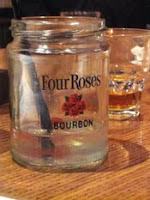
four roses cocktail glassFour Roses is an American whiskey distillery that is located in the town of Lawrenceburg, Kentucky. The state of Kentucky is the famous home of the American whiskey industry with seven companies currently operating and producing numerous brands of whiskey and bourbon. Four Roses was first produced in 1888 and moved to the current Lawrenceburg site in 1910. The distillery is currently owned by the Kirin Brewery Company from Japan and is one of Kentucky's largest distilleries, producing eight million litres of whiskey a year. Much of this is released under the Four Roses name although, as with the other Kentucky distilleries, they also release whiskies and bourbons under different names. The most well known such example made at Four Roses is Bulleit bourbon.

jim rutledge, master distiller at four rosesJim spoke to us and told us many stories and facts about the Four Roses distillery and his experiences there. Our favourite was the story of how Four Roses got its name. It is said to originate from a love story involving the distillery's founder Paul Jones Jnr. and a local woman. Jones Jnr. proposed to her and she stated that she needed time to decide and that she would give him the answer at a forthcoming ball. If she wore a corsage of red roses, then her answer would be 'yes'. At the ball, she turned up wearing a corsage of four red roses and they went on to be married. Jones Jnr. then decided to call his new bourbon 'Four Roses' in her honour and as a sign of his love for her.

In between these stories and facts, we sampled each of the Four Roses bourbons that are available on the UK market - the Yellow Label, Small Batch and Single Barrel. He explained in detail the difference between each of these bourbons. We learnt that Four Roses is unique amongst bourbon producers in that they use two different grain recipes (one with a recipe mix of 75% corn, 20% rye and 5% malted barley and the other with a mix of 60% corn, 35% rye and 5% malted barley) and five different strains of yeast for production. The result of this is that they end up with 10 different versions of Four Roses, as each grain recipe is exposed to one of the five yeast strains and each of the resulting 10 bourbons have differing characteristics from the next one. To make each final bourbon in the range, they use different combinations of the 10. The regular and best selling Yellow Label has some of all 10 included, the Small Batch uses just four of them and the Single Barrel uses just one which is specially selected for its supreme quality. Below are our basic tasting notes, with links to our full previous reviews.
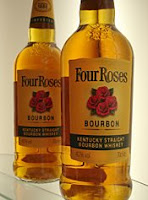
four roses yellow labelFour Roses Yellow Label
This is the biggest selling whiskey in the Four Roses range and is approximately six years of age. The colour is yellow brown and the nose is light with a lovely delicate freshness. It has vanilla, oak, sweet cereal grains (think of corn/maize) and a lemon zest citrus note. On the palate, this offers heaps of vanilla and fresh coconut. It has a refreshing body that also has those cereal and citrus elements from the nose, plus delicate honey. The finish is short but balanced, having an interesting woody bitterness that counteracts the previous sweetness well. For our full review of the Yellow Label - click here.

four roses small batchFour Roses Small Batch
The colour is deep golden amber and the nose is expressive and fragrant. There are prominent aromas of vanilla, coconut, slightly bitter cereal grains (imagine rye bread) and candied orange peel, with subtle nutmeg and cinnamon wood spices and nuts in the background. On the palate the vanilla, cereal grains and the almond-like nuttiness give a creamy mouth coating feeling , with a lovely combination of coconut, honey, cinnamon and nutmeg spice and bitter oranges. The finish has initial sweetness before turning drier and spicier (that cinnamon again). For our full review of Small Batch - click here.

Four Roses Single Barrel
The colour is golden amber and the nose is very intense. A warm spiciness hits first, before plenty of woody and vanilla notes kick in - think of fresh oak shavings, sandalwood and coconut. It is fresh and vibrant with other aromas coming through like caramel and orange oil. On the palate, this is intense - there are plenty of fresh oak and coconut husks. This has a pleasant bitter edge before softer, sweeter notes appear - caramel, brown sugar, cereal grains and vanilla. Additional spices (imagine nutmeg, cinnamon) combine to give depth. The finish is very long and warm with spiciness and woodiness, in addition to a burnt orange note. For our full review of Single Barrel - click here.

What was our favourite? Well, when tasted side by side you really get to feel the quality of the three products - the Yellow Label is soft, light and fresh, the Small Batch is richer and sweeter and the Single Barrel is richer still with plenty of lovely wood spices. On the night, the Single Barrel was our (and most other people's) favourite, however that could all change next time!

Tuesday, June 22, 2010

Have just tried ... Wild Turkey 8 years old (101 Proof)

What's with the name?
Wild Turkey is an American whiskey that is produced in the town of Lawrenceburg, Kentucky. The distillery is one of seven in the state of Kentucky and produces an extensive range of whiskies. The name is said to be derived from a story regarding a former distillery worker called Thomas McCarthy. He used to go on an annual wild turkey hunt with friends and in 1940, he took some whiskey from the distillery with him. They enjoyed it so much that the following year they asked him to bring some more of "that wild turkey whiskey". McCarthy liked the name and soon after the Wild Turkey brand was introduced.

A long and proud history
However, the name could also come from the fact that the original distillery founded by the Ripy family in 1869, was built on Wild Turkey Hill. The Ripy family quickly gained recognition for the high quality of their bourbon and this culminated in it being selected to represent the state of Kentucky at The World Fair in 1893. As with all American distilleries, the Ripy distillery was forced to close during the Prohibition period between 1920 and 1933. The distillery was modernised and was one of the first to re-open for production when Prohibition was lifted. It was taken over by Austin Nichols, a company that began in 1855 trading tea, coffee and liquor, in the early 1970s and later became part of the massive Pernod Ricard group. This helped to establish Wild Turkey as a strong export brand internationally. Wild Turkey is currently owned by another large drinks corporation, the Campari Group, who took control in 2009.

Locally sourced ingredients
This Wild Turkey eight years old is America's best selling premium aged bourbon. It has an alcoholic strength of 50.5% ABV (101 Proof using the old US system - a name which it can also be found by) and costs around £25-30 a bottle in the UK. The ingredients used to make the whiskey are grains (primarily corn grown in Kentucky, mixed with barley and rye), water which is taken from a limestone well within the distillery and yeast - this is a secret formula and is cultivated at the distillery. The whiskey is aged in new white oak casks, which are heavily charred so as to add additional flavour, for a minimum of eight years.

Our tasting notes
The colour of this Wild Turkey eight years old is golden amber and the nose is packed with expressive characteristics. There is immediate and obvious cereal grain and this is followed by some sweeter aromas such as dried fruits (think of raisins and candied orange peel), vanilla and coconut. The nose feels prickly with alcohol and has distinct notes of burnt sugar and toasted almonds coming through. On the palate, this feels thick in the mouth and again has a complex, yet well balanced mixture of notes present. It is very grainy (especially reminiscent of the more bitter types of grain, like rye) with plenty of wood spice (imagine cinnamon, ginger and nutmeg) and that distinct toasted almond and burnt sugar again. There is also some peppery heat. Sweeter elements begin to balance out these spicier, bitter notes and these include sweet honey, vanilla, coconut and orange. The finish is punchy and long, with a fresh, zingy combination of orange zest, ginger, oak and that pepper-like heat. The finish becomes more woody with time and gets drier and drier, leaving your mouth gasping and wanting more!

What's the verdict?
This is a lovely example of an American bourbon. It has great balance between the sweeter and spicier elements and is easy drinking, despite its high alcohol content. We recommend drinking it without water, as when water is added the spiciness and heat are flattened out and the bitter woody notes take over. The balance seems to be taken away. However, it may be too dry or spicy for some, especially whisky beginners or those new to bourbon, so adding water is an option here. A must try whiskey and one that is a decent price for the high quality.

Thursday, April 22, 2010

Have just tried ... Four Roses Single Barrel

From the heart of Kentucky
Four Roses is an American whiskey distillery that is located in the town of Lawrenceburg, Kentucky. The state of Kentucky is the famous home of the American whiskey industry with seven companies currently operating and producing numerous brands of whiskey and bourbon. Four Roses is currently owned by the Kirin Brewery Company from Japan and is one of Kentucky's largest distilleries, producing eight million litres of whiskey a year. Much of this is released under the Four Roses name although, as with the other Kentucky distilleries, they also release whiskies and bourbons under different names. These all use different traditional recipes during production and the most well known example made at Four Roses is Bulleit bourbon.

For further information on American whiskies and bourbons, then check out the American page on our website - whiskyforeveryone.com.

Details of the whiskey
This Single Barrel forms part of the revamped Four Roses' core range which also includes the best selling Yellow Label and a Small Batch release. As the name suggest, this whiskey is released from a single casks and each bottle is hand signed and labeled with the master distillers initials and the warehouse location from which it was taken (this is cask number 36-1M - 36 being the warehouse number, 1 being the row of the warehouse and M being the shelf/rack that the cask was stored). Single barrel expressions of American whiskies are rare, although this is changing as consumer demand grows. Four Roses Single Barrel is aged for approximately eight years, is bottled at an alcoholic strength of 50% ABV and has won numerous awards since it was first released in 2005. It should cost £35-40 a bottle from selected specialist alcohol retailers.

Our tasting notes
The colour of this Single Barrel is golden amber and the nose is very intense. The alcohol (50% ABV) hits first and gives a warm spiciness, before plenty of woody and vanilla notes kick in - think of fresh oak, wood shavings, sandalwood and coconut. It feels fresh and vibrant with other aromas coming through such as caramel, some citrus (imagine orange oil) and a hint of tropical fruit (think of banana and peach especially). On the palate, this is equally as big and intense as the nose suggests. Again, the alcoholic kick is hot and there is plenty of woodiness (especially the fresh oak and coconut husks). This is on the borderline of becoming bitter before some softer and sweeter notes come through - think of caramel, brown sugar, cereal grains, vanilla and those tropical fruits from the nose. Additional wood spices (imagine peppercorns and cinnamon) combine to give great depth. The finish is very long and warming with the spiciness and woodiness in abundance, in addition to a burnt orange note.

The high alcohol strength and intensity of Four Roses Single Barrel suggest the addition of some water. How much you add is up to you! With a few drops, the alcohol strength and the spiciness is softened and allows more of the sweeter vanilla, caramel and fruit elements to come through. The addition of some water may make this whiskey more palatable to a wider audience.

What's the verdict?
Wow! This is one hell of a dram and it takes no prisoners. It is a big, intense whiskey that is not for the faint hearted, but one that softens while still holding its complexity with the addition of water. It is interesting to try a bourbon at a higher ABV strength and from a single cask - if they are all this good then it is only a matter of time before more companies release them. Single Barrel also offers good value for money, especially when compared with a similar product from a Scottish single malt distillery which would start at around £50 a bottle.

Wednesday, April 14, 2010

Have just tried ... Woodford Reserve

woodford reserve bourbonPrize winning bourbon
Woodford Reserve is a bourbon that is produced in small batches by the Labrot & Graham distillery. The distillery is located in the American state of Kentucky, close to the town of Versailles. Woodford Reserve whiskey is presented in a recognisable narrow square bottle and varies in strength from 43-46% ABV, depending on the batch. It is made using a secret combination of corn, rye and malted barley grains and is the only bourbon that undergoes a triple distillation (most others are distilled twice). Woodford Reserve is the official bourbon of the world famous Kentucky Derby horse race and has won many prizes worldwide. These include a Double Gold Medal at The World Spirits Competition in 2000 and this made it the first bourbon to ever win that prestigious prize.

Kentucky's oldest
The distillery was founded in 1812 by Elijah Pepper, making it the oldest operational whiskey distillery in Kentucky. Kentucky is widely regarded as the heart of the American whiskey industry. The current distillery buildings were erected in 1838 and it was named the Oscar Pepper Distillery after Elijah's son. In 1878, Leopold Labrot and James Graham became the new owners and they changed the name to the Labont & Graham Distillery. This name appears on the current bottles of Woodford Reserve.

The birth of Woodford Reserve whiskey
Labont and Graham ran the distillery until 1941, when they sold up to the Brown-Forman Corporation. Brown-Forman are still in ownership and also own the Jack Daniel's distillery in the neighbouring state of Tennessee. They mothballed (the process where a distillery is taken out of service but remains intact) and sold the distillery in 1968. However, they decided to start producing premium small batch bourbons and re-purchased the Labont & Graham distillery, which they saw as ideal for the purpose. This was in 1993 and following a complete refurbishment, including new stills made in Rothes in Scotland, production was restarted. Woodford Reserve, which is named after the Woodford County where the distillery is located, was first introduced in 1996 and we are now on the release of batch number 59.

Our tasting notes
The colour of Woodford Reserve is a rich amber orange and the nose is intense, sweet and spicy. There is an immediate hit of vanilla and oak and it feels very woody (think of new oak furniture or wood shavings). Underneath this, other elements reveal themselves - coconut, honey, maple syrup, orange oil and warm spices (imagine ginger and nutmeg). On the palate, a similar thing happens - your mouth is hit with a ton of oak and vanilla before other notes begin to come through. The vanilla has a creaminess to it and the combination of the coconut, orange oil and warm spices (especially the ginger) from the nose in addition to some brown sugar and slightly bitter cereal grains, give the whiskey depth and complexity. The initial oak grips your palate and hangs on right the way through to the long finish. The finish becomes increasingly dry, tannic and spicy - imagine a combination of heavy oak, cereals (especially the more bitter rye grains), ginger, nutmeg and a touch of hot chilli.

What's the verdict?
Woodford Reserve is one of the increasingly popular bourbons within the cocktail world. It is easy to see why as its exaggerated flavours and deep complexity would manage to stand out when mixed with any manner of other things. When taken neat, this is a lovely bourbon for those same reasons but it may be a little too rich, woody or spicy for some palates, especially the uninitiated bourbon drinker. However, that should not stop you trying this excellent whisky. A bottle should cost between £25-30 from specialist retailers and some larger supermarkets.