Sunday, January 31, 2010

Have just tried ... Kavalan Port Cask finish

kavalan port cask finishA Taiwanese whisky?
Kavalan is a single malt whisky that is made by the King Car Corporation in Taiwan. King Car was set up in 1979 and is now Taiwan's biggest beverage and food manufacturers. This new distillery is one of the most technically advanced in the world and is located in Yuanshan, a town in the north of Taiwan. Yuanshan lies to the south of the major cities of Taipei and Keelung and close to the Pacific coast. It has copper stills that were constructed in Scotland and the distillery has an annual capacity of approximately six million bottles.

Beating the Scots

The profile of Kavalan Taiwanese whisky has risen dramatically following a recent blind tasting. This was held by famous British newspaper The Times and they put Kavalan single malt up against three Scottish blended whiskies and the new St. George's English whisky. To read the full article from thetimesonline, click here. They cheekily did this on Burns Night (Scotland's unofficial national day and one where whisky forms an important part of the celebrations) and invited esteemed people from the world of whisky to taste each one blind. We suspect that they were trying to get a 'controversial' non-Scottish winner as the outcome and they succeeded as Kavalan gained significantly more marks than the other entrants.

Why Kavalan?
King Car decided to name their whisky range Kavalan after a group of indigenous people who lived in the Yi-Lan County where the distillery is located. The range of whisky is currently small and consists of two single malts (including this Port cask) and the Solist collection, which currently has two single cask releases - one from a bourbon cask and one from a sherry cask. The Kavalan whisky has been created, selected and blended by the legendary Dr. Jim Swan, the Master Distiller at Penderyn distillery in Wales. He is a worldwide authority in the field of alcoholic beverages and has consulted with numerous distilleries, breweries and wineries over many years. We have written about the regular single malt and the bourbon cask Solist - click on the links to read.

More 'angle's share'
This Kavalan Port Cask is bottled at 40% ABV and is matured in ex-bourbon casks before being transferred to Port casks. It is currently only available in Taiwan and major cities in China, with a bottle costing around £50. The whisky is only three years of age, but whisky ages much faster in Taiwan's warm and humid climate. They have to bottle it at this age as they lose around 10% of the whisky's volume each year to the angel's share (the name given to the evaporation of the spirit while maturing in the cask). In comparison, this figure is around 2% a year in Scotland. We would like to thank Ian Chang, the Head Distiller at Kavalan, for giving us this sample and Lisa Huang for introducing us to Kavalan whisky.

Our tasting notes
This Port Cask finish is walnut brown in colour and the nose is rich and appealing. There is a sumptuous mix of aromas - toffee and dried fruits (think of currants and dried apple) are predominant with vanilla, coconut, walnuts, honey and warming spices (imagine cinnamon and cloves). On the palate, this still has some richness but feels fresher, lighter and spicier than the nose suggests. There is again toffee (although this is more like burnt sugar now) and dried fruits (think of currants and dried orange peel) and these are joined by vanilla, nuts (more like walnut oil this time), honey and the warming spices (still cinnamon and cloves but slightly more peppery). The whole feel is a little reminiscent of mulled wine at Christmas. There is also more red fruitiness (imagine grapes or stewed cherries) that comes through with time. The finish is lovely, rich and of medium length. It is pleasantly sweet, fruity and spicy but a little tannic and drier at the end (this can be felt on your gums especially).

What's the verdict?
Kavalan Port Cask finish is an interesting, lovely whisky. The richness and complexity belies its youthful age and it makes for very pleasant and easy drinking whisky. It is the richest, fruitiest of the three Kavalan whiskies that we have tasted to date. All are very different and very good and we cannot wait to taste more or see what new expressions they are planning. If you are ever travelling through south east Asia, then we would recommend that you have to try these whiskies. Let's hope that with their recent publicity that Kavalan gets a wider distribution and enables more people to try it.

Friday, January 29, 2010

Have just tried ... Glen Garioch Founder's Reserve

One of Scotland's oldest
Glen Garioch (pronounced glen-geery) was founded in 1797 by Thomas Simpson. This makes it one of Scotland's oldest whisky distilleries that is still in operation. Glenturret is the oldest having been opened in 1775. The original name was Glengarioch (the Garioch is a fertile strip of local farmland that is well known for producing top quality barley) before changing to Glen Garioch in the 1930s. It is located in Oldmeldrum, a small town in the Highlands, which is close to Aberdeen. The distillery is Scotland's most easterly and has an annual production capacity of approximately one million litres.

New expressions
Glen Garioch is currently owned by Morrison Bowmore, which is a subsidiary of the Japanese company Suntory. They took control in 1994 and one year later, they decided to mothball the distillery (mothballing is the process where a distillery is closed but all the equipment remains intact and ready to go again, when required). Until this point, Glen Garioch had produced a lightly peated style of whisky but when it was reopened in 1997, Suntory decided to stop this practice and go for a non peaty style. The range of whisky is small and has just been completely revamped. This Founder's Reserve and a 12 years old form the main part of the range and these are joined by two vintage expressions, 1978 and 1990 (both of which are in the previous lightly peated style). These were released in Europe in Autumn 2009 and will be introduced to the north American and Asian markets shortly.

Our tasting notes
The Founder's Reserve is amber gold in colour and the nose is initially intense and punchy. There is strong malty cereal and some raw spirit, before the nose begins to soften and reveal some lovely aromas - caramel/burnt sugar, vanilla, coconut, dried fruits (especially sultanas), some woody spicy nutmeg and just a hint of citrus (think of orange oil). On the palate, this feels thick and coats the inside of the mouth, starting off sweetly before becoming drier. The sweetness has butterscotch, vanilla and dried fruits (imagine sultanas, raisins and candied peel) notes to it and these are joined by the drier elements - lots of malty cereal grains, a distinct spiciness (think of black pepper and nutmeg) and the tiniest hint of some peaty smoke. The finish has a decent length which has the butterscotch and dried fruit sweetness but also has some peppery spiciness, more maltiness and a tart, sharp spirity nature to it, which is slightly unpleasant (to be fair this become much more palatable and softer when we revisited this whisky the next day).

What's the verdict?
This Founder's Reserve is bottled at 48% ABV, which is a slightly higher alcoholic strength than most 'standard' whiskies in any distilleries range. A bottle should cost £30-35 from specialist retailers, although there are also plans to introduce it to the travel retail/Duty Free sector. Having never tried any whisky from Glen Garioch before, this was certainly interesting to see what the distillery has to offer. The higher than normal ABV led us to add some water but this made it flatten out and lose its vibrancy and intensity. At 48% ABV, it is more rounded and well balanced than expected. This was great to try but may not have the broadest appeal due to the strong maltiness throughout - as a beginner, it would be a good whisky to try once you have sampled some others and want to step up to something different.

Wednesday, January 27, 2010

Have just tried ... Glenmorangie 18 years old

One of the world's leaders
Glenmorangie is one of the most famous whisky distilleries and biggest selling brand names in the world. It is located on the edge of the north eastern Highland town of Tain, on the shores of the Dornoch Firth estuary. The distillery opened in 1843 by William Mathesen and the buildings were previously a brewery. The original name was Morangie before becoming Glenmorangie in 1887. It is currently owned by drinks company Moet Hennessy. Glenmorangie's range is extensive and covers different ages and cask finishes. The distillery tour is also excellent and we can recommend it. Their Original is the second best selling single malt whisky in the UK (behind Glenfiddich 12 years old) and is the fifth best seller in the world.

Scotland's tallest stills
Glenmorangie is one of Scotland's largest whisky distilleries and has a production capacity of six million litres per year. They also have the tallest set of stills of any distillery in Scotland with each one standing over 5 metres (16.5 feet) tall. The still room resembles a cathedral with the tall stills accentuated by equally tall windows. The current stills are direct replicas of the originals (these were bought from a gin distillery in London, which explains why they are different to other traditional whisky stills). This extra height means that only the purest and lightest spirit reaches the condenser and gets collected for maturation.

Our tasting notes
The whisky has spent around 15 years in bourbon casks and the further three years in Oloroso sherry casks. The colour is a vibrant gold and the nose is clean, fresh and tempting. There is an instant tropical fruit aroma (think of mango, papaya and pineapple) that is quite unlike anything that we have experienced before. This is backed up by plenty of oaky vanilla, malty cereal grains, brown sugar and a hint of citrus (especially lemon zest). On the palate, this feels rich and sweet but somehow remains fresh. The intense and unusual tropical notes are again prominent and mix beautifully with a complex combination of other notes - dried fruits (imagine sultanas and a touch of candied orange peel), nuts (hazelnuts and coconut), caramel, honey, vanilla and some zesty citrus (think of lemons and maybe grapefruit). The finish is long, complex and refreshing - it begins with the sweet caramel and tropical fruit notes (especially mango) before turning drier with a nutty and spicy (think of nutmeg) coming through. Absolutely lovely.

What's the verdict?
This Glenmorangie 18 years old is marketed and packaged as Extremely Rare and forms part of the core range, albeit as a limited release. It has received a packaging re-vamp in 2009 and should cost between £80-85 for a bottle. This is a delicious whisky that combines fresh aromas and flavours with a clean, refreshing nature. The tropical fruit notes are both very pleasant and surprising, as we have never tasted this characteristic to this extent in a whisky. An absolutely cracking dram. We thank Annabel Meikle from Glenmorangie for the opportunity to sample this.

Tuesday, January 26, 2010

Distillery visit - Penderyn

Penderyn (pronounced Pen-derrin) is the only single malt whisky distillery currently operating in Wales. It is located in the village of Penderyn in the Brecon Beacons National Park in south Wales. The distillery is one of the youngest in the UK and is owned by the Welsh Whisky Company, which is made up of a consortium of local businessmen. The WWC was formed in 1998 and production began at Penderyn in September 2000. They adopted the name of the village - it translates as 'head of the kite' from the Welsh language (that's kite as in the type of bird and the Brecons is home to one of the largest populations of them in the UK).

welsh whisky posterPenderyn is the first legal distillery to produce single malt whisky in Wales for over 100 years. The previous one was named Frongoch (pronounced fran-gok) and this was located in the town of Bala in north Wales, close to the famous Snowdonia National Park. The distillery had a short life - the first spirit flowed in 1889 and it was closed in 1900, with the company being wound up in the High Court in 1903. They rather cheekily named their whisky 'Royal Welsh Whisky' (as shown on one of their posters, left), despite never being issued a Royal Warrant. Prince Charles, the current Prince of Wales, is one of the Penderyn's biggest supporters and serves Penderyn whisky at his Highgrove House residence.

Our tour of Penderyn is taken by Sian Whitelock, the Commercial Director at the Welsh Whisky Company. It begins in the impressive visitor centre (actually, it began at Aberdare train station where Sian met us!). The visitor centre and the distillery are all housed under the same roof. The building looks impressive from the outside - it is black and has the increasingly recognisable Penderyn gold flash adorning it (see top image, above). We learn that this flash represents a seam of rare Welsh gold that can still be found in the local area and that the words Aur Cymru and AC initials that are on Penderyn labels, means 'Welsh gold' in Welsh.
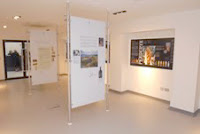
penderyn's visitor exhibitionThe tour begins with an exhibition about Penderyn and its place within the local, Welsh and whisky communities. It feels fresh and light and gives plenty of information on wall and free standing boards and also a short film. The exhibition explains how the geology of the local area and the quality of their water source helped pick the distillery's location (it has a bore hole located next it). There is also a collection of interesting artifacts relating to the old Frongoch distillery, including one of the few bottles left in existence. However, our favourite part was a historical time line that stretched along one side of the room that incorporated significant dates in Welsh, world and whisky history. This helps greatly in putting Penderyn in to context within these three categories.

Next, Sian takes us through to the still room viewing area. Here, we get to see the unique set up that Penderyn have. Firstly, the production process is different. They use a pre-made fermented wash that is made to Penderyn's specifications at the Cardiff based Brain's brewery. In the Scottish whisky industry, the mashing and fermentation processes must happen on the same site as the distillation. We had a sniff of this pre-made wash and it was like a sweet ale, without the hops.
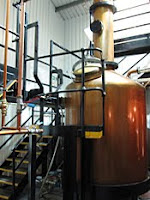
copper still at penderynThe still room is viewed through glass on the regular tour, but we were fortunate enough to be taken in to have a more detailed look through the tiny still room. This unique copper still was specially designed by Dr David Faraday, who is descended from Sir Michael Faraday (a pioneering scientist who studied electricity and magnetism and invented such things as the electric motor and the dynamo). The still has three main sections that are linked. A copper pot still (seen in the image, left) has a pipe leading from the top to another column-still-like structure and the final spirit is collected in a huge glass bulb still safe. The production is a batch process, with each batch taking roughly 10 hours and producing just a single cask of spirit.

The still produces very little waste product as for each charge or batch, it runs on a continuous process. The fermented Brain's wash is heated and the evaporated alcohol vapour rises up the neck before passing along the pipe to go through the column-still-like section. Here, the vapours
begin to re-condense and in a similar way to a column still the vapours can be collected as the desired spirit given that they re-condense at the desired point at which they are removed then piped in the huge glass bulb still safe. The spirits that are not collected are returned to the original copper pot part of the still via another pipe. They then pass through the process again and again until just 1% of the original 2500 litres put into the still is remaining. It is a fascinating set up and one that is truly unique, from transporting the wash in to the still design but also that this entire operation is manual.
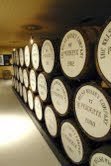
casks at penderynThe spirit that is collected is higher in alcoholic strength (known as the ABV) than the Scottish distilleries casking strength. Penderyn's new make spirit is roughly 80% ABV when it is put into the cask, whereas the average figure is around 65% in Scotland. A higher ABV will mean that the spirit will draw more from the wood in the cask and therefore mature at a quicker rate. We tried some of the new make spirit and despite its strength, it was extremely fresh, vibrant and fruity (think of green juicy fruits like pears and apples) with a spicy chili-like nature to it. The casks are not stored on the compact site of the distillery/visitor centre but in a warehouse a few miles away.

Penderyn use ex-bourbon casks for the majority of their whisky's maturation. These are sourced from the Buffalo Trace distillery in Kentucky, USA. The core range of Penderyn consists of three single malts - the regular release is then part matured in Madeira casks and there are two further, more limited bottlings. The Sherrywood is part matured in sherry casks and the Peated is part matured in ex-Islay smoky whisky casks (this is where it gets its peatiness, rather than using peated malt in the more traditional way). The whiskies are closely monitored and selected at their optimum age by Master Distiller Dr Jim Swan and on-site distiller Gillian MacDonald.

bottling plant at penderyn
Penderyn is also one of the few distilleries that do their own bottling. This is again viewed through a large glass window but we were allowed in to observe from a safe area. They bottle all of their products, including the Brecon gin and Five vodka that they also produce at the distillery. Before bottling, the whisky is brought down to 46% ABV using water from the local bore hole. The tour then concludes with a tasting in the sampling area (we were the first people to try out their new stylish chairs here!). On the regular tour, you are treated to two drams but we got the 'special' treatment! Sian and ourselves were joined by distiller Gillian MacDonald and Visitor Centre Manager Keith Tench, who sampled and explained everything from their current range.
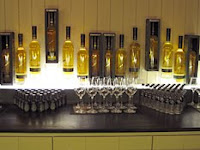
sampling area at penderynTasting notes
Penderyn Madeira
- this is the cornerstone of the Penderyn range. The colour is straw-like with an interesting fragrant nose - vanilla, fresh fruits (apples/pears) and something herbal (dried grasses). On the palate, this remains light with sugary caramel, dried fruits and malted cereal notes present. The vanilla, fresh fruit and herbal elements from the nose come through also. The finish is reasonably long for something a light whisky and is refreshing, with an enjoyable sugary sweetness and woodiness. For our full review - click here.

Penderyn Sherrywood - partly matured in sherry casks, this whisky is golden amber in colour. The nose has an interesting combination of aromas - dried fruit (sultanas/orange peel), caramel, spices (cloves) and herbal grassy note (imagine dried grasses/hay). On the palate, there is sugary sweetness (brown sugar/honey), then dried fruit (sultanas/dried apple). It is buttery and coats the inside of your mouth. The finish is again initially sweet before a grassiness kicks in and makes the finish pleasantly dry. Click here for our full review.

Penderyn Peated - this is partly matured in ex-smoky whisky casks. Therefore, the peatiness is subtle. The colour is light and straw-like and the nose is subtle and fresh (vanilla/toffee/damp earth). On the palate, there is fresh fruit (pears/apples), vanilla and something floral (maybe honeysuckle) before the earthy peat smoke comes through. The finish becomes grassy, herbal and a little dry. Our full review will follow shortly.

Penderyn Rich Madeira - a limited edition whisky that was bottled to commemorate the 125th anniversary of the Welsh Rugby Union Association. It has been matured in ex-bourbon casks then one year in a Madeira cask. Released at 50% ABV, there are only 1250 bottles. It is rich amber in colour and the nose is sweet (caramel) and fruity (dried fruits/sultanas/candied orange peel). These aromas carry through to the palate, combining very well with wood spice (cinnamon/nutmeg) and herbal (dried grasses) notes. A lovely long sweet finish. Our favourite whisky of the day. Our full review will follow shortly.

Penderyn Port Wood - this is Penderyn's most expensive (£275) and smallest (207 bottles) release to date. It was released in August 2009 and bottled at 60.6% ABV. The colour is dark amber/red and the nose has individuality - plenty of caramel/treacle, candied orange peel, dried red fruits and cocoa powder. This is rich on the palate but easy drinking, despite the strength. It is silky with the notes of the nose replicated. With water, more caramel/toffee comes out. The finish is rich, fruity and dry. This reminded us of an Armagnac or Cognac. Our full review will follow shortly.
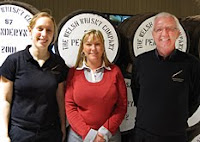
gillian macdonald, sian whitelock and keith tench of penderynThe tour of Penderyn is unlike any other that we have been on, but that is because Penderyn is unlike any other distillery that we have been to. If you go expecting to see the grain mill, mashing, fermenting and maturation as on a traditional distillery tour then you may leave disappointed. However, this offers something fresh and new with a modern, ground breaking take on the traditional techniques. We both thoroughly enjoyed our time and recommend it highly. We thank Gillian MacDonald, Sian Whitelow and Keith Tench at Penderyn (pictured from left to right, respectively), for the invite to their distillery, their hospitality and information while we were there and for letting us sample their innovative whiskies.

Information for the regular Penderyn tour
Entry - £5 per person/ Tour duration - 45 mins/ No. of drams - 2/ Further details - www.welsh-whisky.co.uk

Friday, January 22, 2010

Have just tried ... Talisker 'Distiller's Edition'

talisker 'distiller's edition' 1998Talisker is an iconic Scottish whisky distillery on the isle of Skye. The island lies off the north west Highland coast and forms part of the Hebrides. The distillery is the only one on the island and is located close to the village of Carbost, in the shadow of the imposing Cuillin hills. Despite its remote location, the distillery is one of the most visited in Scotland. Talisker was founded in 1830 by two local brothers, Hugh and Kenneth MacAskill, and has a current annual production capacity of 1.9 million litres.

Talisker is currently owned by drinks giant Diageo and they have recently given the brand a lot of promotion, including a spate of Burns Night events such as the one that we have attended recently. The result is that worldwide sales have risen by 100% in the last five years and it is now Diageo's best selling single malt behind Cardhu. Talisker continues to win prizes around the world, culminating in their 18 years old winning 'Best Single Malt' at The World Whisky Awards in 2007.

The whisky produced at Talisker contributes towards Diageo's famous Johnnie Walker blended whisky range. The rest is released as single malts. The core range is small and contains a 10 years old, the 18 years old and this 'Distiller's Edition', which is finished in Amoroso sherry casks and released in regular batches. This batch was distilled in 1998 and bottled in 2009 with an alcoholic strength of 45.8% ABV. A 25 years old and a 30 years old are also released as limited editions.

The colour of this 'Distiller's Edition' is golden amber and the nose has a warm, welcoming feeling. There is a lovely mix of aromas - dark dried fruits (imagine raisins and sultanas), caramel, nuts (think of hazelnuts), malty cereals, Talisker's trademark peppery smoke, a hint of some cocoa powder - and they combine very well. On the palate, a spicy smokiness hits first (imagine cracked peppercorns and nutmeg) followed by rich, sweet dried fruits (the raisins and sultanas again, with some candied orange peel). The whisky feels velvety in the mouth and the initial characteristics are joined by sweet caramel, roasted nuts (think of almonds especially), something floral (reminiscent of heather), honey, just a hint of cocoa and a tang of saltiness. The complex mix of flavours carries through in to a spicy. It is malty (imagine cereal grains) and sweet before an earthy peatiness and spices (the peppercorns and nutmeg again) come through, making it feel drier at the end.

This version of 'Distiller's Edition' is lovely. The sherry cask influence has softened some of the more fiery characteristics associated with Talisker. We sampled it at a recent tasting (thanks to Colin Dunn from Diageo and Jo at TrimediaUK) where many of the other guests had not tasted much whisky and the general opinion was that 'Distiller's Edition' was easier to drink, richer and more palatable than the regular 10 years old. Having said that, while this 'Distiller's Edition' is very good, the Talisker 10 years old remains one of our favourite drams and is a classic whisky.

Thursday, January 21, 2010

'Address To A Haggis' by Robert Burns

robert burnsThe Address To A Haggis is a famous poem written by Scotsman Robert Burns. It was written as a celebration and homage to Scotland and all things Scottish and has become an integral part of the annual Burns Night celebrations and supper. The 'addressing' of the haggis is one of the central parts of the festivities that happen on or around January 25th (Burns' birth date) each year. For more information on the history and traditions of Burns Night, read our post Explain about ... Burns Night. Here we go (it helps if you have a Scottish accent!) ...

Fair fa' your honest, sonsie face,
Great chieftain o' the puddin-race!

Aboon them a' ye tak your place,

Painch, tripe, or thairm:

Weel are ye wordy of a grace

As lang's my arm.

The groaning trencher there ye fill,

Your hurdies like a distant hill,

Your pin wad help to mend a mill

In time o' need,
While thro' your pores the dews distil

Like amber bead.


His knife see rustic Labour dight,
An' cut you up wi' ready slight,
Trenching your gushing entrails bright,

Like onie ditch;

And then, O what a glorious sight,

Warm-reeking, rich!


Then, horn for horn, they stretch an' strive:

Deil tak the hindmost, on they drive,

Till a' their weel-swall'd kytes belyve

Are bent like drums;
Then auld Guidman, maist like to rive,

'Bethankit!' hums.

Is there that owre his French ragout

Or olio that wad staw a sow,

Or fricassee wad mak her spew

Wi' perfect scunner,

Looks down wi' sneering, scornfu' view

On sic a dinner?


Poor devil! See him owre his trash,

As feckless as a wither'd rash,
His spindle shank a guid whip-lash,

His nieve a nit;

Tho' bluidy flood or field to dash,

O how unfit!


But mark the Rustic, haggis fed,

The trembling earth resounds his tread,

Clap in his walie nieve a blade,

He'll make it whistle;

An' legs, an' arms, an' heads will sned,

Like taps o' thrissle.


Ye pow'rs, wha mak mankind your care,

An' dish them out their bill o' fare,

Auld Scotland wants nae skinking ware
,
That jaups in luggies;
But, if ye wish her gratefu' prayer,

Gie her a haggis!

clark mcginn 'addressing the haggis'Confused? Not sure that you understand a single word? We found this excellent modern day translation that may help you follow this classic poem. It is written by Clark McGinn, an eminent speaker at Burns Night suppers around the world and expert on Burns' poetry and language. We had the pleasure to meet him earlier this week and he can be seen giving his vibrant, energetic 'address' in the image to the left. He has written numerous books on the subject including The Ultimate Burns Supper Book and has a website www.seriousburns.com. If this doesn't help you understand it, then nothing will!

You've an honest, round and jolly face
Great chieftain of the sausage race!

Above them all you take your place,
Offal, tripe or lamb:

You are most worthy of a grace

As long's my arm.

The groaning platter there you fill,

Your buttocks like a distant hill,

Your skewer would help to mend a mill

In time of need,

While through your pores the dews distil

Like amber bead.


His knife is wiped with rustic might,
To cut you up with ready sleight,

Digging up gushing insides bright,
Like out a ditch;

And then, Oh what a glorious sight,

Warm, steaming, rich!

Then spoon for spoon, they stretch out fast:
On they drive - Hell take the last,

Till all their swollen guts so vast

Are tight as drums;
Then old Grandpa, most fit to burst,

'Thanks Be!' he hums.

Who, with a plate of French ragout,

Or pig-sickening oily stew,
Or fricassee to make you throw
With real distaste,

Looks down with a sneering, scornful view

On such a feast?


Poor devil! See him eat his trash,

As feeble as a withered rush,

His skinny legs a mere whip-lash,

His fist a nut;
Through a bloody flood or field to dash,

O how unfit!


But mark the Rustic, haggis-fed,
The trembling earth resounds his tread,

His big fist holds a knife of dread,
He'll make it whistle;

Chopping legs, arms, and every head

Like tops of thistle.


You powers, who make mankind your care,

And dish them out their bill of fare,
Old Scotland wants no soupy ware,

That splosh in dishes;

But if you wish her grateful prayer,

Give her a Haggis!

Explain about ... Burns Night

robert burnsBurns Night is an annual festival that celebrates the life and works of Scottish poet and lyricist Robert Burns (also known as Rabbie to his friends) and has a strong association with whisky. Burns is widely regarded as Scotland's national poet and the festival has become Scotland's unofficial national day. It is celebrated on January 25th, the date of Burns' birth. Burns Night has a rich heritage in Scottish culture and combines two of the nation's favourite pastimes, eating and drinking whisky, with the legendary poetry of Robert Burns.

Robert Burns was born in 1759 in the small town of Alloway, Ayrshire. The town is located two miles (3km) to the south of Ayr in the Lowland region of Scotland. The house where he was born is now the Burns Cottage Museum. Burns was tutored mostly by his father for his early education before starting formal schooling in 1772. His first attempt at poetry was in 1774 - it was entitled O, Once I Lov'd A Bonnie Lass and was inspired by his first love. He went on to write hundreds of poems and songs including famous works such as Tam O'Shanter, My Love Is Like A Red, Red Rose and Auld Lang Syne, which is traditionally sung around the English speaking world on New Year's Eve.

As time passed and Burns' work became more renowned, so did his reputation for liking whisky and women. His heavy drinking and adultery gained him notoriety and scorn within literary circles, although the quality and output of his works remained consistently high. His first illegitimate child was born in 1785 and he went on to father 12 children with four different women (although these totals are believed to both be higher!). He died on July 21 1796, aged just 37, of rheumatic fever that is believed to have been accelerated by a degenerative heart condition from his childhood. His final child was born two days later, on the day that he was buried with full civic and military honours. Burns' grave stands in a graveyard in Dumfries.

So how did Burns Night begin and what does it involve? It is believed that the first Burns Night took place over 200 years ago in 1801. This is less than five years after Burns' death and was celebrated by a group of scholars who were fans of his works. In the early days, it was seen as the perfect platform to celebrate Scotland and being Scottish, incorporating Burns' poetry, Scottish food (most notably haggis, neeps and tatties) and copious amounts of whisky. The popularity and celebrations grew year on year until we have the Burns Night that we know today.

The modern Burns Night supper has evolved over time but remains quintessentially (some would say, stereotypically) Scottish. The core of the supper is the haggis (a mixture of offal, cereal grains, oatmeal, herbs and spices wrapped in the lining of a sheep's stomach) and this is served with neeps and tatties (turnip/swede and potato). This can be proceeded by a soup based starter - the three most common are Scotch Broth (a thick soup that contains barley and anything else that you may have), Cullen Skink (a fish based chowder) or Cock-a-leekie soup (the clue is in the name - it's chicken and leeks, then prunes are added). Dessert can take any form (if you have space or haven't had a heart attack by this point!), with cheese, Cranachan (whipped cream, whisky, raspberries and oatmeal) or Clootie Dumpling (a cake made with dried fruit, condensed milk, spices and golden syrup, then cooked in a cloth or cloot in Gaelic) being the most popular. These are traditionally accompanied by whisky at every opportunity.

addressing the haggisThe main ceremonial part involves the reading of Address To A Haggis - a poem written by Robert Burns to celebrate Scotland and its national food. The haggis is bought in and placed on a table and then the reader performs the poem to the haggis and the crowd. This can be accompanied by bagpipes at larger events (as seen in the image, left). The final act of the poem is to slash the stomach membrane of the haggis to reveal its contents and for the reader to down a dram of whisky (occassionally, another dram can be poured over the steaming haggis). Then the rule is to toast the haggis, have a fun evening and drink whisky!

Other Burns Night facts ...
* Approximately 15 million people worldwide annually celebrate Burns Night.
* There are statues of Robert Burns in Central Park, New York and at Poet's Corner in Hyde Park, London.
* It is estimated that 70% of the UK's annual haggis consumption happens on or around Burns Night.
* Burns Night contributes a staggering £150 million to the Scottish economy each year.
* The poetry of Robert Burns have been translated in to almost every known language and have been used in the works of legendary figures such as Jimmy Hendrix and The Beatles.

Thursday, January 14, 2010

News ... Diageo 'Manager's Choice Single Cask Collection' (Part 2)

This week has seen the release of the second phase of Diageo's 'Manager's Choice Single Cask Collection', which is an exclusive limited range of whiskies that are being released on four different dates. The idea for the range was that each of the managers of Diageo's 27 whisky distilleries in Scotland were asked to select just one cask from their maturing stock. This cask was to represent the definitive taste of their distillery's product and character. All are released at their natural cask strength. As each manager has only selected one cask, the number of bottles of each whisky is limited. This makes each one very rare and the prices reflect this (all are in the £200-300 bracket).

There was much discussion about the first release of the 'Manager's Choice Single Cask Collection' on blogs, websites and forums, with the majority focusing on the youthful ages and high prices. Due to the very limited nature of the releases, tasting notes and other information for the first release were scarce. There seems to be a similar story for this second release, with very few tasting notes around so far (check out Cask Strength for this, they have tried a couple of them). Information regarding the third and fourth phase releases is even sketchier.

Here, we have tried to gather as much information as we can about the 'Manager's Choice' series. The information for the first release can be seen on our original post, written last September - click here to read that article. For this second phase, we have included the RRP (recommended retail price) in the UK, the predominant cask that the whisky has been matured in, the alcoholic strength (ABV), the number of bottles available, plus the distilling and bottling dates. These all appear in brackets next to each whisky. For the third and fourth releases, we have still only been able to find the RRP to date, but plan to add more information when we can.

Release 2 - 11th January 2010
Blair Athol (£200/ex-sherry cask/57.4% ABV/570 bottles/distilled 1995, bottled 2009)
Cragganmore (£250/ex-sherry cask/59.7% ABV/564 bottles/distilled 1997, bottled 2009)
Dalwhinnie (£250/ex-bourbon cask/51% ABV/ 270 bottles/distilled 1992, bottled 2009)
Dufftown (£250/ex-bourbon cask/59.5% ABV/282 bottles/distilled 1997, bottled 2009)
Glen Spey (£200/new American oak cask/52% ABV/276 bottles/distilled 1996, bottled 2009)
Strathmill (£200/new American oak cask/60.1% ABV/300 bottles/distilled 1999, bottled 2009)
Talisker (£300/ex-sherry cask/58.6% ABV/582 bottles/distilled 1994, bottled 2009)

Release 3 - 4th March 2010
Caol Ila (£300), Dailuaine (£200), Glen Ord (£250), Glenkinchie (£250), Inchgower (£200), Mannochmore (£200), Royal Lochnagar (£250)

Release 4 - 4th June 2010
Auchroisk (£200), Benrinnes (£200), Clynelish (£250), Glendullan (£200), Glenlossie (£200), Knockando (£250), Lagavulin (£300)

There is also a rumour that Diageo may release a whisky from their new Roseisle distillery as part of this series. The whisky is still maturing to reach the legal age of three years and if true, this will be the first ever bottling of a single malt whisky from Roseisle.

Tuesday, January 12, 2010

In the whisky cupboard ... Laphroaig Quarter Cask

laphroaig quarter caskLaphroaig (pronounced la-froyg) is one of the most famous whisky distilleries in the world. It is located on the island of Islay, which lies off the west coast of Scotland. Laphroaig is renowned for producing very smoky, peaty flavoured whisky and the 10 years old in their range is the best selling smoky whisky in the world. The distillery was founded in 1810 by two brothers, Aleaxander and Donald Johnson, and is currently owned by drinks corporation Beam Global. It has an annual production capacity of 2.9 million litres and they produce some of the smokiest whiskies in the world there.

The Quarter Cask is of a younger age to the best selling 10 years old expression (rumours are that it is 5-7 years old). The main difference is that Laphroaig partly mature the spirit in smaller casks that are a quarter of the size of a regular cask (these quarter casks hold approximately 50 litres each). This recreates the traditional practice when all whisky casks were roughly that size - a practice which has now largely died out. This means that the whisky has up to 60% greater contact with the oak than in a regular modern day whisky cask and therefore, the oak has a greater influence than normal on the final flavour.

Laphroaig Quarter Cask is bottled at the slightly higher 48% ABV. The colour is golden with a touch of amber and the nose is pungent, aromatic and very promising. It is a feisty mixture of the powerful smoke (imagine sticking your head in a bonfire) and earthy notes (think of wet moss), coupled with an underlying sweetness of malted barley, caramel and tropical fruit (this sounds strange but think of tinned fruit cocktail). There is also a distinct salty, briny note present that is reminiscent of seaweed or sea spray. On the palate, the sweet peaty smokiness leads the way but it feels more like burning ash or the embers of a bonfire now and this gives a gripping, bitter edge to the whisky. It feels thick and slightly oily in the mouth and the peat is complimented by some caramel and toffee, plenty of vanilla, sweet malty cereals and that distinct briny saltiness. Despite its robust nature, the saltiness refreshes the palate and leaves you wanting more (or maybe that's just us!). The finish is long, with the ashy smoke lingering before slowly fading away. The sweet caramel, vanilla and malt elements are counteracted by the saltiness, something bitter (imagine iodine and burning bonfire embers) and some peppery spice. The result is that it ends up being pretty dry. It is easy to see why many describe the feeling of Laphroaig as having an antiseptic or 'medicinal' quality.

What a cracking whisky this is! It is certainly not going to be to everyone's taste but if you like your heavily smoky whiskies, then you simply have to try this. The complex combinations of sweet, smoky and salty elements work very well and offers excellent value for money. Laphroaig Quarter Cask is readily available from specialist whisky stores, larger supermarkets and travel retail/Duty Free. A 70cl bottle should cost £25-30.

Monday, January 11, 2010

Have just tried ... Paddy Old Irish Whiskey

paddy old irish whiskeyPaddy is an Irish whiskey that has a rich heritage. It was first produced by the Cork Distilleries Company in 1779 and was called Cork Distillery Old Irish Whiskey (not the catchiest name, was it?). In 1881, a new salesman joined the distillery and he was soon to become legendary. His name was Paddy Flaherty and his sales technique and figures led to the profits of Cork Distillery Old Irish Whiskey rocketing. His name became synonymous with the product to the point where people all over Ireland would ask, "Have you tried Paddy's whiskey?".

The name was changed by popular demand in 1912 and Paddy whiskey has been available ever since. The whiskey is distilled three times (as most Irish whiskies are) in small pot stills. It has a particularly high malted barley content compared to other Irish whiskies and is then matured in ex-bourbon casks for seven years. Sadly, Paddy is now increasingly hard to find in the UK following the decision by Midleton, the current owners of the brand, to restrict the export of it and some of its other brands. If you can find a bottle (check out smaller convenience or liquor stores especially - that's where we found it), then it should cost £15-20.

As mentioned, Paddy is now made at the Midleton distillery, which is located in the southern part of Ireland in County Cork. Midleton was founded in 1975 following the joining of the Cork Distillers Company, John Jameson & Son and John Power & Son in the late 1960s. This group was called the Irish Distillers Group. They built the new distillery, which is now the largest in Ireland and one of the largest in Europe with an annual capacity of 19 million litres. Some of the most famous names in the Irish whiskey industry are made at Midleton, all to their original traditional recipes. These include Jameson, Midleton Rare, Powers, Redbreast and Tullamore Dew.

The colour of Paddy is a pale golden yellow and the nose is aromatic and clean. There is plenty of fresh vanilla and malted cereals up front, before they are joined by some lovely honey, nutty (think of almonds and hazelnuts), oaky and grassy notes (imagine dried grasses or hay). On the palate, this whiskey is mild, soft and light with the mellow malted barley and vanilla again particularly prominent. A very strong honeyed note then comes through and this is joined by other elements - sweet coconut, some toffee, more grassiness (dried hay again), toasted nuts (almonds especially) and some woody spice (think of cinnamon). The finish is soft, sweet and very malty and grainy. The finish lingers for a good length of time considering the general lightness of the whiskey. It becomes quite dry and woody right at the end and this is joined by a strange slightly metallic note.

Paddy is a lovely, light and fresh whiskey ("quaffable" we once heard it described as!). It is very easy drinking and would be a great introduction to Irish whiskey for a beginner. The whiskey is uncomplicated but thoroughly enjoyable and refreshing. The good pricing also means that it represents decent value for money (if you can find it...).