Showing posts with label knockdhu. Show all posts

Monday, October 2, 2023

Review / Ancnoc Peated Sherry Cask Finish & Peatheart Batch 3


The AnCnoc Peated Sherry Cask Finish and the AnCnoc Peatheart Batch 3 are two new whiskies from the Highland distillery of Knockdhu. The pair feature peated spirit, which is only distilled for a short period each year and uses locally sourced Aberdeenshire peat. Both whiskies were created by Gordon Bruce, the Distillery Manager at Knockdhu, and will be available in selected markets worldwide. 

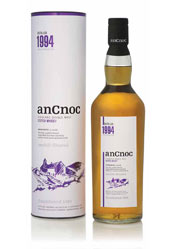
The AnCnoc Peated Sherry Cask Finish (pictured, above left) is a permanent addition to the range and combines the distillery's peated and classic non-peated spirits. These were matured initially in American oak ex-bourbon casks before being married and finished in ex-sherry casks sourced from Jerez, Spain. It is bottled at 43% ABV and will cost just £40. 

Friday, June 30, 2023

Inbox / The Week's Whisky News (June 30, 2023)


Welcome to Inbox, our weekly round up of whisky news and PR material that has found its way in to our WFE email. It was created as we cannot write full articles or do justice to every piece received. It features items from around the world of whisky and is published by us each Friday. Within Inbox we aim to write a few lines detailing each press release/piece of news/PR event that we have received and provide links, where possible, for you to find out further information. 

Monday, November 2, 2020

Allotment Drams - AnCnoc 12 years old & Crabbie's 8 years old

We have two more episodes of our Allotment Dram series, the short videos where we sit and talk about whisky in the surroundings of our north London allotment, for you. This time Matt has two Highland single malts that he is discussing and tasting. First, he looks at the AnCnoc 12 years old from the Knockdhu distillery on a lovely sunny Autumn afternoon. Find out why it is called a different name from the distillery where it is made, plus his thoughts and tasting notes. 
 
Then on his next visit it is much greyer and gloomier weather. Watch as he talks about the Crabbie's 8 years old from independent bottler and whisky maker John Crabbie & Co. Find out about the history of the company, both good tiumes and bad, and how it has been revived. Then he opens the bottle and tastes it for the first time ever. Find out his thoughts and tasting notes.

To keep up-to-date with or our videos or to subscribe to our channel, please click here.


#AllotmentDram


Wednesday, October 7, 2020

Review - AnCnoc Peatheart Batch 2


This whisky is a new release from the east Highland distillery of Knockdhu. The AnCnoc Peatheart Batch 2 is a limited edition and forms part of the brand's ever increasing range of smoky whiskies. These are made for a short period each year, a process which started 15 years ago, and use Highland peat cut locally during the malting process. It follows on from the inaugural batch of Peatheart from 2017, which was exclusive to Sweden, and has a phenol measurement of 40ppm (phenol parts per million). The Peatheart Batch 2 has been matured in American oak ex-bourbon barrels. There are just over 10,000 bottles available.

Friday, October 2, 2020

Inbox - The Week's Whisky News (October 2, 2020)


Welcome to Inbox, our weekly round up of whisky news and PR material that has found its way in to our WFE email. It was created as we cannot write full articles or do justice to every piece received. It features items from around the world of whisky and is published by us each Friday. Within Inbox we aim to write a few lines detailing each press release/piece of news/PR event that we have received and provide links, where possible, for you to find out further information. Here is the news from this week ...

Friday, August 30, 2019

Inbox - The Week's Whisky News (August 30, 2019)


Welcome to Inbox, our weekly round up of whisky news and PR material that has found its way in to our WFE email. It was created as we cannot write full articles or do justice to every piece received. It features items from around the world of whisky and is published by us each Friday.

Friday, April 8, 2016

Inbox - The Week's Whisky News (April 8, 2016)

Welcome to this week's Inbox.  For those that have recently discovered us, Inbox is our weekly round up of whisky news and PR material that has found its way in to our email inbox. It was created as we cannot write full articles or do justice to every piece received. It features items from around the world of whisky and is published by us each Friday.

Friday, February 19, 2016

Inbox - The Week's Whisky News (February 19, 2016)

Welcome to this week's Inbox.  For those that have recently discovered us, Inbox is our weekly round up of whisky news and PR material that has found its way in to our email inbox. It was created as we cannot write full articles or do justice to every piece received. It features items from around the world of whisky and is published by us each Friday.

Friday, January 30, 2015

Inbox - The Week's Whisky News (January 30, 2015)

Welcome to this week's Inbox.  For those that have recently discovered us, Inbox is our weekly round up of whisky news and PR material that has found its way in to our email inbox. It was created as we cannot write full articles or do justice to every piece received. It features items from around the world of whisky and is published by us each Friday.

Friday, November 7, 2014

Inbox - The Week's Whisky News (November 7, 2014)

Welcome to this week's Inbox.  For those that have recently discovered us, Inbox is our weekly round up of whisky news and PR material that has found its way in to our email inbox. It was created as we cannot write full articles or do justice to every piece received. It features items from around the world of whisky and is published by us each Friday.

Monday, May 12, 2014

New releases - AnCnoc 'The Peaty Collection'


The Highland distillery of Knockdhu have released three new limited edition whiskies in their AnCnoc single malt range. The Peaty Collection marks a new chapter in anCnoc's history as they are the first smoky whiskies to be released by the brand. The distillery has been making peated spirit in very limited runs for the last 10 years or so. The Rutter, Flaughter and Tushkar expressions are all named after traditional tools used to cut peat.

Monday, May 13, 2013

New release - AnCnoc 22 years old

The east Highland distillery of Knockdhu have announced a new single malt release in to their core range - the AnCnoc 22 years old.  The new whisky has been predominantly matured in ex-bourbon casks, along with a small percentage of ex-Oloroso sherry casks.  It has been bottled at 46% ABV and is non chill-filtered.  The initial release will see 5,700 bottles appearing in selected markets including Denmark, Germany, Japan, Russia, Sweden, Taiwan, the UK and the USA.  The recommended price is £85 a bottle.

Wednesday, February 20, 2013

Have just tried - AnCnoc Peter Arkle 2nd Edition

Back in the Autumn, we reported that the Highland single malt brand of AnCnoc (pronounced a-knock) had unveiled the second expression in a series created in collaboration with a renowned Scottish illustrator Peter Arkle. The partnership, which launched in April 2012, revolves around a series of limited AnCnoc single malt expressions presented in packaging designed by the artist. Matt T reviewed the First Edition when that was launched last Summer - click here to read his review.

Wednesday, March 14, 2012

New release - AnCnoc 1998 Vintage

The increasingly popular single malt brand of AnCnoc (pronounced a-knock), have announced a new release in their growing line of Vintage expressions. This one was distilled in 1998 and has been matured in a combination of ex-bourbon and ex-sherry casks. There are only 5,100 bottles and the whisky is being released at 46% ABV and non chill-filtered. It is just appearing now in specialist whisky retailers in selected markets - France, Germany, Japan, Russia and the UK. The recommended retail price is £50 a bottle.

The AnCnoc single malts are produced at the Knockdhu distillery. Knockdhu (pronounced nock-doo) lies deep in the rugged countryside of the eastern Highlands, with the closest town being Huntly. The distillery is one of the most traditional in the Scottish whisky industry with no computers to aid production. Everything is controlled by the skills of the distillery workers and Knockdhu produces approximately one million litres of spirit per year.

Knockdhu translates as 'black hill' from Gaelic and the name of the single malts were changed to AnCnoc (simply 'the hill' in Gaelic) in the 1990s, so as to avoid consumer confusion with the similarly named Speyside distillery of Knockando. It was founded in 1893 by a company called Distillers Company Limited (DCL), with production starting in 1894, and it is currently owned by Inver House Distillers. For more information on the brand, go to www.ancnoc.com.

Our tasting notes
The colour is golden yellow and the nose is fresh, vibrant and sweet. There are immediate aromas of crisp green pears and apples, which are quickly joined by strong notes of crumbly brown sugar. With time this obvious sweetness becomes more honey-like and other aromas seem to develop - think of vanilla, malty cereals, cinnamon, some dried fruit (especially sultanas) and a hint of orange zest.

On the palate, this feels initially very soft and velvety, before becoming slightly tangy towards the end - this feeling is driven by the orange zesty note from the nose). There is a combination of elements such as bittersweet, malty cereals, drying wood spices (imagine cinnamon and nutmeg) and sweet vanilla, honey and brown sugar, which all combine and marry together well. There are a number of further characteristics that add some depth and interest - dried fruits (especially some sultanas and raisins, plus dried apple), toasted almonds, toffee, a herbal note which is reminiscent of dried grass and just the faintest, most distant hint of some tobacco-like smoke.

The finish is reasonably long and holds the interest. Firstly, it appears sweet and full of honey, then the tangy, zesty orange note is to the fore, then this becomes increasingly nutty (think of the toasted almonds from the palate again), before it completes its journey with some lovely drying wood spices.

What's the verdict?
This new version of AnCnoc is a lovely single malt and a very good, solid effort from this growing brand. Previous versions have tended to be on the lighter, aperitif side but there is clearly a little more ex-sherry cask influence in this 1998 Vintage which has beefed it up slightly and added some pleasant sweetness. The zesty, tangy notes work particularly well and add complexity. This would be a good choice for a whisky beginner/new single malt drinker, which is one of the audiences that AnCnoc are marketing themselves at.

Tuesday, November 23, 2010

Have just tried > The AnCnoc range

the sncnoc single malt rangeThe AnCnoc (pronounced a-nock) single malt whisky range is produced at the Knockdhu distillery. Knockdhu (pronounced nock-doo) lies deep in the rugged countryside of the eastern Highlands, with the closest town being Huntly. The distillery is one of the most traditional in the Scottish whisky industry with no computers to aid production. Everything is controlled by the skills of the distillery workers and Knockdhu produces approximately one million litres of spirit per year. Knockdhu translates as 'black hill' from Gaelic and the name of the single malts were changed to AnCnoc (simply 'the hill' in Gaelic) in the 1990s, so as to avoid consumer confusion with the similarly named Speyside distillery of Knockando. It is currently owned by Inver House Distillers.

We recently visited the Knockdhu distillery and were delighted to be shown around by Gordon Bruce, the Distillery Manager. For more information on the distillery and to read about our visit - click here. At the end of the tour, Gordon took us through some of the AnCnoc single malt range and the tasting notes for these can be found below. Our thanks go to Gordon for his knowledge, insight and hospitality, which made our visit so memorable.

Only around 15% of the whisky produced and matured at Knockdhu is then bottled as single malt, although this figure is increasing as AnCnoc becomes more recognised and popular. The main markets for AnCnoc are Germany, Sweden, the UK and the USA. The rest is used in a wide variety of blended whiskies. The core range consists of the 10 and 16 year olds and these are supplemented by limited edition releases which carry a vintage statement showing the year they were distilled. Independent bottlings are rare and will generally be released under the Knockdhu name.

Knockdhu new make
This new make spirit had only been distilled on the previous day and had an alcoholic strength of 69% ABV. The chance to try new make spirit is a rare one and is interesting as it gives big clues about the characteristics that you will find in the final bottled whiskies. This was a clear liquid with a very fresh nose that was fruity (think of green pears and apples) and peppery. These were also present on the palate and were joined by hints of honey, vanilla essence and lemon zest. It feels slightly oily in the mouth and the hot pepper spice returns for a crisp finish.

ancnoc 12 years oldAnCnoc 12 years old
This whisky is the cornerstone of the AnCnoc single malt range. It has a golden colour and the nose smells very promising with a pleasant mixture of honey, vanilla, a hint of dried fruit (think of sultanas) and zingy citrus notes (imagine lemon zest). On the palate, this feels thin and is light and fresh with some dried fruitiness (sultanas again), vanilla, honey and that citrus element. These are joined by notes of distinct cereal grains and dried grasses, which add an underlying dryness that tempers the earlier sweetness well. The finish is crisp, refreshing if not a little short. This is easy drinking and would be great as an aperitif but may be a bit light for some palates.

ancnoc 16 years oldAnCnoc 16 years old
This is the only single malt in the AnCnoc range that is 100% ex-bourbon cask matured. All of the others have differing percentage mixes of ex-bourbon and ex-sherry casks. This is pale lemon in colour with a fresh, aromatic nose - vanilla, cereals and crisp green apple notes are prominent with some citrusy lemon zest, coconut and fresh grass notes joining in. with time a linen-like aroma comes through. On the palate, this is crisp and lighter than the nose suggests with a pleasant mixture of vanilla oakiness, citrus, coconut, grasses and some spiciness (imagine ginger and cinnamon). The finish is short and drying with the vanilla and spices dominating. A lovely, refreshing whisky that was much better than we remembered.

ancnoc 1995 vintageAnCnoc 1995 vintage
This whisky was a very limited edition that was only put in to the German and Russian markets. Gordon fished this one out from his 'special' cupboard, so the chance to try it was easily taken! The colour is golden amber and the nose is distinctly fruity (think of sultanas and raisins). There is also plenty of fudge, vanilla and oak aromas, plus hints of honey and cinnamon spice. More of the sweet fudge and vanilla notes come through on the palate, although this turns slightly bitter and more reminiscent of burnt sugar with time. It feels creamier than most of the other AnCnoc's in the mouth, with the dried fruits and pleasant spice again present. The finish is of good length and is decently dry and oaky.

ancnoc 1994 vintageAnCnoc 1994 vintage
The colour is of this limited edition whisky golden with a hint of amber tone. The 1994 is the latest vintage release in the core range of AnCnoc, following on from a 1993 one. The nose is expressive and obviously sweet to begin with - initial honey and sultana notes are joined by a prominent cereal grain note plus something nutty (think of almonds) and grassy (imagine dry hay or straw). The palate reflects the characteristics of the nose well, although the cereals become more dominant with time. The finish is equally as grainy with an interesting mix of honey, vanilla and some dry wood spices (especially cinnamon). A good and easy drinking dram that offers something sweeter to the AnCnoc range.

ancnoc 1975 vintageAnCnoc 1975 vintage
The oldest AnCnoc single malt that is currently on the market. This whisky is a very different beast to any of the others that we tried. The colour is a dark golden amber and the nose is packed with interesting and intense aromas - vanilla, ginger, candied peel, cinnamon, cereals and orange oil. On the palate, this feels rich and full bodied with an intense woody spice (the cinnamon and ginger again) giving way and incorporating delicious notes of vanilla, cereal grains, coconut and orange. A hint of cocoa powder comes through right at the end. The intensity is fantastic but may be too much for some, so we tried it with a few drops of water - it remains very good with the orange note becoming even stronger and the spiciness dying slightly. The finish is dry and oaky. A great dram.

Distillery visit > Knockdhu

knockdhu distilleryThe final part of our recent tour took us to Knockdhu (pronounced nock-doo) distillery. The tour saw us visit a trilogy of whisky distilleries owned by Inver House Distillers, which is a subsidiary of the larger Thai Beverages company. Knockdhu was founded in 1893 by a group called Distillers Company Limited (DCL), who discovered natural springs in the surrounding hills, with production of whisky beginning in October 1894. The name of Knockdhu comes from the Gaelic language and translates as 'black hill'. The single malt whisky released from the distillery is known as AnCnoc (pronounced as a-nock) and this simply translates from gaelic as 'the hill'. Inver House took the decision to change the name of the single malts from Knockdhu in the 1990s, so that consumers would not confuse it with the Knockando distillery in Speyside.

The address of the distillery is given as Knock, near Huntly. As we discovered, addresses can sometimes be misleading! We skirted around the edge of the town of Huntly and headed off the main road in search of the village of Knock and therefore, the distillery. Over half an hour of driving passed as we drove down increasingly narrow roads in to the impending gloom of dusk and a developing fog. The two main questions being that "we must be there soon, mustn't we?" and "where the hell is this place?" The answer turned out to be that the village of Knock and its distillery are in the middle of nowhere, certainly not 'near' Huntly! The village has just a few houses plus the distillery and it sits at the bottom of an imposing black hill, which gives Knockdhu its name. The first impression was of a stunning location.

gordon bruce - knockdhu distillery managerOur tour was taken by Gordon Bruce, the Distillery Manager of Knockdhu (pictured, left). Gordon has worked his way up through the ranks, having started as a mash-man at Pulteney distillery back in 1986 and has come to Knockdhu via Balblair. He has held the position of Distillery Manager at 'The Knock', as he affectionately calls it, since 2006. We discover that he lives with his family in one of the few houses in the tiny village of Knock, is on call at the distillery 24/7 and that his two dogs frequent the distillery regularly - the comment being that "they are more photogenic than anyone else who works here!" Sadly, they were not there on the day of our visit.

ruined warehouse at knockdhu distilleryKnockdhu is not open to the public, so the chance to have a look around was to be a real treat. Despite this, Gordon commented that he has never turned any visitor away in his four years as Distillery Manager and has always found the time for himself or another member of staff to show them around. We begin with a short walk to the back of the distillery and pass two piles of rubble (pictured, left). Gordon explains that these are the remains of two of Knockdhu's five warehouses, which collapsed under the weight of heavy snow last winter. They managed to save most of the maturing whisky but he gets visibly emotional as he describes the loss of 18 casks - the roof caved in and the side walls were pulled down as a result, smashing the casks. This damage equated to £150,000 worth of whisky and included casks from 1989 to 2009.

The tour begins with a rare treat - a trip to see the distillery's old kiln and the chance to go inside it! Nowadays, most distilleries do not produce their own malted barley, so the malting floors and kilns are redundant. The kiln at a distillery is housed in the pagoda structure (Knockdhu's is pictured, below left) and these charismatic buildings give a distillery some photographic charm, but little else these days. Knockdhu's pagoda and kiln hasn't been used for around 40 years.

left - pagoda at knockdhu distillery, centre - inside the pagoda, right - view up in to pagoda ventWe firstly take a look at the large oven before moving upstairs, where Gordon opens a small doorway and beckons Matt, who happens to be first on the scene, inside. Faced with blackness and a fear of heights, Matt is reluctant - only for Gordon to reassure him with the words, "trust me, I'm a distiller!" before patting him on the back to coax him in! Once inside, we are standing on the mesh floor where the grains once sat with the kiln oven directly below us. The inside of the structure (pictured, above centre) is in some disrepair but plans are in place to renovate it. Gordon tells us that with a bit of work the kiln and its pagoda could function again, as everything including the triangular vent (viewed from directly below, above right) is operational. This was a totally unique experience and was put in to perspective when we were told that the room we had stood in could hold 25 tonnes of malted barley at a time.

mash tun at knockdhu distilleryAfter a brief visit to the milling room, which includes a Porteus mill from 1964 and a state-of-the-art grain filtering machine, we move on to the mash room. This room is is dominated by the huge circular stainless steel mash tun, where the malted barley is mixed with warm water to dissolve the soluble sugars from the grain. This water is added in three stages, with each stage at a higher temperature - this helps to ensure that the maximum amount of sugars are extracted from the barley. The three temperatures at Knockdhu are approximately 63°C, then 72°C and finally 82°C. This mash tun is new, having been installed in the summer of 2009, and boasts a striking domed copper top which replicates that of their previous mash tuns. We get to see the second water being added here.

washbacks at knockdhu distilleryNext up is the room where the fermentation takes place. This houses six large wooden tanks, known as washbacks. Here they take the sugary liquid from the mash tun (called wort) and add yeast to create alcohol. Each washback holds 21,500 litres of wort and to this they add 100 litres of liquid distillers yeast. The final product is called 'wash' and this has an alcohol level of around 8% ABV - the equivalent to a strong beer. It is interesting to hear that Gordon finds this the most interesting part of the whole whisky making process. The reason is that it is the one part that is hardest to control as you are relying on nature to do the job for you. In contrast everything else can be controlled by the workers - milling, mashing, distilling etc. We take the opportunity to try the 'wash', which is reminiscent of a malty, fruity ale.

It is only after Gordon's comments above on the fermentation and his emphasis on the skill of the distillery workers, that something becomes obviously apparent. This 'something' is confirmed in the still house - Knockdhu has no computers operating any stage of its whisky making process. Computers are now commonplace in many distilleries and control all aspects of production, so to see a distillery that is totally reliant on the traditional skills of its workers is unusual and refreshing. One of our group points this out and Gordon shows us the only 'computer' in the distillery ... a calculator!
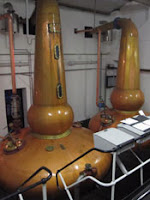
stills at knockdhu distilleryThe still room at Knockdhu is on the small side but feels much less cramped than those at Balblair and Pulteney. Here the stills (pictured, left) have more room and have flatter than normal bases, in comparison to many distilleries that have more bulbous ones. This forces the alcohol vapours to travel up tall narrow neck of the stills and helps to ultimately produce the light, fresh style of spirit that Knockdhu is well regarded for. The vapours then move along the horizontal lyne arms and out through the side wall of the still room in to a worm tub. Worm tubs are large tanks of cold water through which a spiraled copper pipe passes and this condenses the alcohol vapour back to a liquid spirit. Few distilleries still have worm tubs these days, preferring condensing units. Knockdhu is unique in the Scottish whisky industry as it is the only one to have both stills connected to the same worm tub. Sadly, it was dark by this point so we could not go up and see the coiled piping and water inside the worm tub properly.

The darkness and ever increasing fog prevented us from having a look in one of the remaining warehouses but Gordon then took us back to the offices, where he took us through a tasting of some of the whiskies bottled under the AnCnoc name. The brief tasting notes for these whiskies will follow shortly in a separate post. A massive thanks goes to Gordon for his time, insight, information and hospitality on our visit. We highly recommend a visit to this fascinating traditional whisky distillery and remember, you will never be turned away ...

Sunday, November 7, 2010

Competition > Win 5cl whisky samples

Last week, we joined a whisky bloggers trip to Scotland as guests of Inver House Distillers. We were taken to visit three of their distilleries - Balblair, Knockdhu and Old Pulteney - and our distillery profiles, whisky tasting notes and photos from the trip will be appearing over the forthcoming week or so. However, while we write and you read about our trip, we have decided that we would also like a lucky somebody to sample some the fine whiskies from these three Highland distilleries. As a result, we have a trio of 5cl bottles to give away - AnCnoc 12 years old, Balblair 1989 and Old Pulteney 12 years old.

We had this competition in mind before we went to Scotland but could not decide on the nature of it. However, one particular event that happened on the trip made it a 'no brainer' and led to a one-liner to end all one-liners (and there were a few top ones on that trip!). This became the centre of a conversation on the minibus where it was commented that, if taken out of context, this would be a very obscure and, if possible, even funnier. The whole group started discussing other funny one-liners that they had seen or heard, that when taken out of context didn't make any sense or made you sit up and think "What the ...?"

So our competition is - which one-liner or statement has made you sit up and think "what is that all about?" or "what happened to get to that conclusion?" It can be whisky related or not and may have been said or witnessed first hand by yourself, a friend or a colleague. Equally you may have seen a random text, Facebook status update or tweet on Twitter that didn't make any sense but made you wonder how or why someone had typed it. Also, let us know where you saw or heard it. We will choose our favourite on Friday 12 November and the winner will receive the three samples. Simple.

Our visit to Scotland > Autumn 2010

The last week has seen us being quiet on the blog and website, but we do have a good reason! We were invited to join a group of whisky bloggers on a whistle-stop two day tour to Scotland, as guests of Inver House Distillers. The itinerary was to take us from our comfort zone in London up to the far north of Scotland, starting at Old Pulteney in Wick and then driving down the north eastern coast of the Highlands to take in Balblair and through the Speyside region to Knockdhu (otherwise known as AnCnoc). It gave us the chance to visit three distilleries with very unique personalities, taste some great whiskies from each and finally put some names to faces from the non-London whisky blogging community. These included some of our favourite and 'must read' blogs.

Scotland Whisky Tour - Old Pulteney, Balblair and KnockdhuThe other bloggers on the trip were Chris and Lucas from Edinburgh Whisky, Jason of Guid Scotch Drink fame, Mark from Glasgow Whisky (& Ale), Keith from the Whisky Emporium, James the writer of Scotch Odyssey, Ben from Masters of Malt and Johan from Onversneden. We were also joined by Cathy from Inver House Distillers. We anticipate that all will be posting the events, distillery and tasting notes over the coming week, so be sure to check them out - especially the ones you may not have checked or read before.

After a night in a Japanese style pod-room in Yotel at Heathrow, we caught a flight to Edinburgh where we were to catch a connecting flight to Wick, the most northern (and possibly smallest, having now been there!) commercial airport on the UK mainland, at 11.00. Shortly after our arrival in Edinburgh at 09.15, the departure screen informed us that our Wick flight was delayed until 13.00. "Oh darn", we thought (or something slightly stronger). This turned out to be due to our 30-seater plane and staff being in the wrong place - the time changed to 14.20, back to 13.00 and then 14.20 again as we felt a touch of desperation set in on FlyBe/LoganAir's part! All of this as Lucas and Cathy waited up in Wick ...

However with hindsight, the delay was good on two counts - 1> it led to an impromptu group bonding session with the majority of our whisky blogging party and 2> the offer of a £5 lunch voucher from the somewhat sheepish airline. As the hours of wait whiled away, we learned lots about our fellow traveling companions, their backgrounds and what drove them to become part of the whisk(e)y blog community. Attention turned to how to get the most out of the free £5 voucher, with one suggestion that we pool all eight vouchers together to make one über food voucher of £40 and then buy a bottle of whisky from the Duty Free shop being particularly creative. Sadly, common sense and increasing hunger won.

Finally, they found us a plane, we were loaded on and the propellers started. It was 14.30. After a bumpy but gorgeous flight (especially the last part up the north east Highland coast as the sun began to set), we landed at Wick three and a half hours late. The airport 'terminal' resembled a doctor's surgery waiting room and had possibly the shortest baggage reclaim belt in the aviation industry - the rugged chap handing each passenger their bags through a hatch, having driven them the short distance from the plane on his red tractor! Cathy and Lucas were there to meet us, having been in Wick for hours, and we piled in to the minibus like an eager group of school kids on a trip. So, off we went to Old Pulteney ...

The reviews of our visits to Old Pulteney, Balblair and Knockdhu distilleries plus relevant tasting notes of the whiskies that we sampled, photos, accounts and stories that happened on the trip and a competition to win whisky samples from each place will follow in the coming week or so. We hope that you enjoy our posts and those of the companions on the trip.

Wednesday, July 1, 2009

Have just tried ... AnCnoc 16 years old

ancnoc 16 years oldAnCnoc is a single malt whisky produced at the Knockdhu (pronounced Knock-doo) distillery in the Speyside region. The name of AnCnoc (pronounced a-knock) was created in 1993. The current owners, Inver House Distillers, felt that the name of Knockdhu was getting easily confused with another Speyside distillery, Knockando. They took the decision to rename the whisky produced at Knockdhu (which translates as 'black hill' in Gaelic) and it was changed to AnCnoc (simply 'the hill' in Gaelic), so as to avoid any confusion. The brand has recently been revamped with the new modern graphic packaging and advertising pushing sales up. The idea being to attract a younger crowd to their single malts.

The Knockdhu distillery was opened in 1893 and is relatively small, currently producing around 900,000 litres of whisky per year. It is located near to the town of Huntly on the south eastern side of Speyside. It is very close to the 'border' of Speyside and the Highlands, so is sometimes classed as a Highland whisky. The distillery is one of the few remaining that are run using traditional methods, rather than computers and mechanical processes. The core range has a 12 years old, this 16 years old and some more limited vintage releases (currently a 1975 and a 1994). Independent bottlings are rare but will be generally named as Knockdhu.

This AnCnoc 16 years old is pale lemon in colour with an aromatic nose. The nose has a fresh feeling with vanilla and citrus (imagine lemon zest) being the main components. Underneath these is a floral note (think of honeysuckle), something vegetal and a hint of liquorice (the combination of these last two reminding us of fresh fennel). On the palate, this is crisp and very light (much lighter than the more complex nose suggested). Unfortunately, the first thing you get on your taste buds is raw spirit but this soon dies away to give a pleasant mixture of vanilla oakiness, citrus (more like orange this time), that green vegetable/liquorice note (fennel, definately now) and a hint of something minty or eucalyptus. The finish is short and dry leaving your mouth watering and wanting a glass of water. Vanilla is dominant again with a slightly unpleasant and bitter woody note hanging around the longest.

This is a strange whisky. It offers a lovely and fresh nose but lacks the same level of complexity and depth on the palate. It feels light and thin in your mouth and the spirity nature of the palate and the finish cannot be ignored. Despite this, the whisky is quite enjoyable and refreshing and would be good on a warm day or in a cocktail (which is one of the ways that Inver House market the range). At £40-45 a bottle it has a lot of competition from more well known and established whiskies. The feeling is that it lacks the complexity of these competitors, some of which are cheaper, and therefore will struggle to stand up strongly against them.

Thursday, September 25, 2008

Have just tried ... AnCnoc 12 years old

ancnoc 12 years oldThe name of AnCnoc (pronounced an-knock) was created in 1993. The current owners, Inver House distillers, felt that the whisky produced at their Knockdhu distillery was easily confused with another Speyside distillery, Knockando. So they took the decision to rename the whisky produced at Knockdhu (this means 'black hill' in Gaelic) as AnCnoc ('the hill' in Gaelic), so as to avoid this confusion. The Knockdhu distillery was opened in 1893 and currently produces around 900,000 litres of whisky per year. It is located near to the town of Huntly in Speyside, although it is very close to the 'border' of Speyside, so can sometimes be classed as a Highland whisky. The distillery is one of the few to be traditionally run, with a reliance on human judgement rather than computers and mechanical processes. The core range has this 12 years old and a 16 years old along with some vintage releases (currently a 1975 and a 1994). Independent bottlings are rare and generally will be named as Knockdhu.

This 12 years old has a golden amber colour and the nose smells promising with a fairly rich mixture of honey, vanilla, dried fruit (think of sultanas) and zingy citrus notes (imagine lemon zest). However, this early promise doesn't come through on the palate. It feels thin and very light with some dried fruitiness (sultanas again) and that citrus element. There is an underlying bitterness that appears almost instantly, that left me disappointed. The finish is crisp and short but with that bitterness again. Overall, a bit of let down following the promise of the nose, bordering on unpleasant because of that bitter note. However, as with all of these notes, it is a matter of taste and this should cost between £20-25 a bottle.