Showing posts with label cask strength. Show all posts

Thursday, June 13, 2024

Review | Lochlea Cask Strength Batch 2


Cask Strength Batch 2 is the latest limited-edition single malt whisky from the Ayrshire field-to-cask farm distillery of Lochlea (pronounced lock-lee). This second batch is both older and features different casks to the inaugural 2023 release. The batch features a cask make up not seen before in previous bottlings from the distillery - ex-Pedro Ximenez sherry (60% of the marriage) and ex-Oloroso sherry (28%) butts, plus STR ex- red wine barriques (12%). All the whiskies were distilled in 2018 or 2019.

Wednesday, May 1, 2024

Review | Drop & Dram by The Scotch Malt Whisky Society


The Scotch Malt Whisky Society (or SMWS for short) have launched Drop & Dram – a monthly subscription service aimed at allowing whisky enthusiasts in the UK to explore new flavours without having to pay for full annual membership. The new initiative, which formed part of the company's 40th anniversary celebrations when introduced in November last year, costs £45 per month. It is currently exclusive to the UK.

Tuesday, October 17, 2023

Review / Torabhaig Allt Gleann Batch Strength


This whisky is the latest limited edition single malt whisky to be released from the Hebridean distillery of  Torabhaig (pronounced tora-vaig). the newest distillery on the isle of Skye. The Torabhaig Allt Gleann Batch Strength is a cask strength version of their popular Allt Gleann bottling, which was first released in 2021. Allt Gleann translates as 'old glen' from the local Gaelic dialect. The whiskies featured in Batch Strength were distilled in 2017 and 2018, and filled to ex-bourbon barrels. It forms part of The Legacy Series alongside the original Allt Gleann expression and other bottlings. Torabhaig Allt Gleann Batch Strength is released at 61.1% ABV and will be available in selected world markets, plus at the distillery shop on Skye. A bottle will cost £75/ €85/ $US89.  

Monday, December 12, 2022

Review / Glendronach Cask Strength Batch 11


This new whisky is the latest bottling in the popular annual cask strength series from the east Highland distillery of Glendronach. The Glendronach Cask Strength Batch 11 is a celebration of both natural strength whisky and of Glendronach's heavily sherried style. It has been created by Dr. Rachel Barrie, the Master Blender for Glendronach, using a combination of spirit matured in Spanish oak ex-Oloroso and ex-Pedro Ximenez sherry casks. 

The Batch 11 has been bottled at 59.8% ABV and is limited in number, although the exact quantity has not been revealed. It is both non chill-filtered and of natural colour. It will be available in specialist whisky retailers in selected global markets. A bottle will cost £68/ $78 US. 

Wednesday, April 27, 2022

Review / Glendronach Cask Strength Batch 10


This whisky is the latest in the annual cask strength series from the east Highland distillery of Glendronach. The Cask Strength Batch 10 has been delayed by the Covid pandemic and was created by Dr. Rachel Barrie, the Master Blender for Glendronach. The new no age statement release is constructed using whiskies of differing ages that have been maturing in ex-Oloroso and ex-Pedro Ximenez sherry barrels. These have been hand-selected and married together by Barrie. The Glendronach Cask Strength Batch 10 is bottled at 58.6% ABV and will be available in limited numbers in selected markets worldwide. A bottle will retail for £77/ $105 US. 

Tuesday, February 9, 2021

Review / Glendronach Cask Strength Batch 9


This new single malt is the latest bottling in the highly anticipated Cask Strength series from the east Highland distillery of Glendronach, which is normally released annually. The Glendronach Cask Strength Batch 9 has been slightly delayed due to the Covid-19 pandemic and each batch is made to be different and have its own personal character. Batch 9 has seen whiskies matured in both ex-Oloroso and ex-Pedro Ximénez sherry casks of differing sizes (both puncheons and butts are included). These have been selected at different ages  before being married together by Dr. Rachel Barrie, the Master Blender for Glendronach.

Saturday, March 21, 2020

Review - Glendronach Cask Strength Batch 8

This whisky is the latest in the east Highland distillery's annual limited edition cask strength release and was released in Autumn 2019. The Glendronach Cask Strength Batch 8 has been created by Master Blender Dr. Rachel Barrie using whiskies matured for a minimum of 10 years in both ex-Oloroso and ex-Pedro Ximénez casks, plus smaller quarter casks. It has been bottled at the natural strength of 61% ABV and is non chill-filtered and of natural colour. The Glendronach Cask Strength Batch 8 is available in specialist whisky retailers worldwide and costs a recommended price of £62 per bottle.

Tuesday, May 27, 2014

New release - Bowmore 15 years old 'Laimrig'

This whisky is the latest of Bowmore's Laimrig releases.  The Laimrig first appeared in 2009 as an exclusive for Sweden and has been released in annual limited batches ever since.  The name translates as 'pier' from Gaelic and refers to the stone pier of Bowmore harbour, which is next to the distillery on the shores of Loch Indaal.  The Laimrig batches are bottled at cask strength and are predominantly aged in ex-bourbon casks, before being finished for about a year in ex-Oloroso sherry butts.

Sunday, March 17, 2013

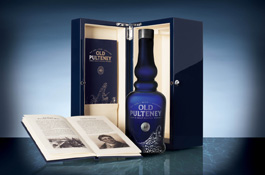
New Release - Old Pulteney 40 Year Old

Old Pulteney Distillery is the northernmost mainland distillery in Scotland. Located in the town of Wick, the distillery is squeezed tightly into the surrounding streets and buildings and space is at such a premium that the Wash Still has had to be designed with an unusual flat top so as to allow it to fit into the Still Room. Luckily the compromise with the still shape has not adversely affected the quality of the whisky produced and the Old Pulteney 21 Year Old was rated as the best whisky of the year in whisky writer, Jim Murray’s 2012 Whisky Bible.

Monday, February 18, 2013

New release - Auchentoshan Valinch Batch #2

Just before Christmas, we reported in Inbox that Auchentoshan had announced the second release of their Valinch bottling.  The whisky is named after the 'valinch', a metal pipette-like device used to pull whisky samples from a cask, and is an annual cask strength single malt released in small batches. The 2012 edition is bottled at 57.2% ABV and has been matured exclusively in first fill ex-bourbon American oak casks. There are 12,000 bottles in this year's batch and is available now from specialist whisky retailers, priced around the £45-50 mark.

Saturday, January 12, 2013

New Release - Glendronach Cask Strength Batch 1

Skirting the border of the region designated as “Speyside” by the Scotch Whisky Association. Glendronach lies within the rolling arable land of the Aberdeensire countryside between Huntly and Aberdeen. Long held in high esteem as an excellent malt but only really attracting a cult following due to its scarcity, Glendronach is finally attracting a lot of interest since its present owners took over from Pernod Ricard in 2008.

Thursday, August 2, 2012

New Release - Johnnie Walker Blue Label 'The Casks Edition'

As we reported in our Inbox bulletin of 27th July, Johnnie Walker the famous blended whisky brand have launched a limited edition cask strength version of their Blue Label expression.  Named Blue Label 'The Casks Edition', this new whisky has been blended from a small selection of their finest casks that were hand picked by Johnnie Walker's Master Blender Jim Beveridge.

He comments, “Only one in ten thousand of our casks have sufficient character for Blue Label and in creating this special edition we really wanted to showcase the incredible flavours that come from the casks themselves”.

The Johnnie Walker brand is owned by drinks giant Diageo, and is named after Johnnie Walker, a man who owned a small grocery shop in the Ayrshire town of Kilmarnock in Scotland in the 1820s. Back then, nearly all whisky sold commercially was a blend. Having first learnt to blend different teas together, Johnnie Walker used his skills to create a commercially successful whisky blend and the rest is history, as they say.

In the early days his whisky was made with local clients in mind and was sold in small quantities. The success of the brand really took off during Victorian times when it was exported around the British Empire. As the Empire expanded, more people enjoyed the range and brand has never looked back. This is shown in the fact that Johnnie Walker whiskies were already exported to 120 countries before Coca Cola had left America in the 1920s.

First launched in 1991, no age is stated on the Blue Label but the youngest whisky included is rumoured to be around the 28 years old mark, with some of the whisky coming from rare or closed distilleries such as Brora. The blend contains over 20 rare single malts and superior grain whiskies.

Our tasting notes
The colour is a deep coppery gold. On the nose vanilla, butterscotch, light brown sugar and deep citrus notes (making me think of candied oranges). There is plenty of oak too and a little smoke in the background. The overall impression is intense yet mellow.

All the aromas can be found on the palate, which displays the power and delivery of a cask strength whisky (55.8% ABV in this case). In addition to vanilla, butterscotch and orange citrus there is a biscuity flavour carrying with it a trace of something savoury, slightly earthy.

The oak spices and grains make a marked early impression, staying the course and carrying a fine grained quality. The texture of this whisky also makes it pleasant to hold in the mouth, as you feel the oak spices develop and bittersweet orange flavours combine on the finish.

What's the verdict?
It is a rare treat to enjoy such an iconic whisky as Blue Label at its natural bottled strength. The whisky is quite mouth cleansing and if you find it a little too astringent then our recommendation is to try a measure with a dash of water. We found this calms the oak and spices whilst still leaving plenty of ‘grip’ to the whisky. Overall it makes for a rounder and slightly sweeter drinking experience.

With a recommended retail price of $300 USD for a one litre bottle this also looks to be good value when compared to the standard Blue Label release which is bottled at 40% ABV and retails for approximately $180-190 USD/£140-150.

Monday, July 23, 2012

New release - The Sirius Collection


The Sirius Collection is a new range of premium and old single cask whiskies.  The range is the brainchild of passionate whisky collector and investor Mahesh Patel, a man who has over 3,000 bottles of rare whisky in his private collection.  He has also launched and hosted the Universal Whisky Experience, one of the world's biggest super premium whisky shows, in Las Vegas earlier in the year.  Now Mahesh has launched his own whisky range, with which he aims to bring his passion for whisky to the luxury market.

There are four whiskies in the first release of The Sirius Collection - two single malts and two single grain whiskies.  All are over forty years of age, are from single casks and bottled at the natural cask strength.  Each has been hand selected by Mahesh and a small group of associates, from over 100 samples of rare whisky, with the focus on supreme quality.  Further bottlings are planned along similar lines, but these will only be released as and when the casks are ready.

The range is named Sirius after the brightest star in the night sky.  The name comes from the ancient Greek language and means 'glowing'.  It is often known as 'the dog star' and has been used as a navigation point of reference throughout human history.  Now, Mahesh is using the Sirius reference to plot his own journey through the world of whisky.  The four whiskies in the initial release of The Sirius Collection represents the best discoveries of his journey to date.

The packaging design has also been overseen by Mahesh and features striking tall bottles, cylindrical lacquered display boxes and velvet carrying bags.  The single malts are sold in black and the single grains are in white.  The Sirius Collection is exclusively for sale through The Whisky Shop, the UK's largest whisky retail chain. Details of the four whiskies can be found by visiting any of the chain's 21 stores or via the website www.whiskyshop.com.

________

Carsebridge 1965
(41% ABV/ 63 bottles/ price £1,000)
The Carsebridge distillery was founded in the town of Alloa in 1799 and was initially built to produce single malt.  However in 1851 it was converted by the owners to a grain whisky distillery in order to help meet the demand for the booming blended whisky markets.  It remained in production until 1992.  It was then dismantled and whiskies from Carsebridge are now very rare. 

It is a rare treat to try a single grain whisky of this age and this one did not disappoint.  The ex-bourbon cask has given a rich golden yellow colour which is backed up with a wonderfully perfumed nose of coconut, vanilla, peaches, orange zest and plenty of woody spices (think of nutmeg, vanilla and cedarwood).  On the palate, this whisky is surprisingly fresh and uplifting.  The vanilla, spices and orange from the nose are present, and are complimented by notes of honey, caramel and hints of coffee and chocolate.  The finish is long and increasingly dry with the wood spices coming to the fore.
________

Dalmore 1967
(64.3% ABV/ 89 bottles/ £3,500)
The Dalmore distillery is located in the north Highland town of Alness and was founded in 1839.  The current owners are Whyte & Mackay and they have pressed on with a significant promotional drive that has seen Dalmore become established as one of the world's premium Scotch single malts.  Old casks are extremely rare and notoriously carry a high retail price.

This single malt has spent the entirety of its life maturing in an ex-rum cask and this has given the whisky a dramatic dark amber, almost black, colour.  The nose is equally as expressive and full of dark aromas - think of molasses, treacle, dark chocolate, espresso coffee and a hint of menthol.  On the palate the richness continues as the sweet treacle-like notes mix with others such as tropical fruit, toasted nuts, bitter oranges, brown sugar and over ripe banana.  It remains surprisingly fresh somehow, which stops it from being too heavy and cloying.  The finish is long and sumptuous and full of the chocolate and coffee notes.
________

Fettercairn 1966
(52.6% ABV/ 39 bottles/ £1,750)
Fettercairn was established in 1824 and is located in the east Highland town of Laurencekirk, which lies half way between Dundee and Aberdeen.  Like Dalmore, the distillery is currently owned by Whyte & Mackay.  The reputation of Fettercairn's single malts is growing, but most of the whisky maturing at the distillery remains destined for Whyte & Mackay's range of blends.

The rarest of The Sirius Collection bottlings has been matured in an ex-bourbon cask and this has given a dark golden amber hue.  The nose has a mix of fruity aromas (think of peach, mango and figs) and exotic spices (imagine cinnamon, nutmeg and all-spice).  On the palate the rich fruitiness continues with plenty of dark dried fruits - figs, prunes, dates and raisins especially.  There are also notes of roasted nuts, salted caramel and a hint of mint.  The exotic spices also continue and add a delicious drying quality to the lengthy and rich finish.  The sum of the parts is reminiscent of Christmas pudding or fruit cake.

North British 1962
(44.5% ABV/ 138 bottles/ £1,200)
North British is a single grain distillery which is the last remaining distillery within the Edinburgh city boundaries.  It was established in 1887 and remains in production today.  Its grain whisky is highly sought after by the blending companies and is a key ingredient in such famous brands as Chivas Regal, Cutty Sark, Famous Grouse and J&B Rare.  The distillery is joint owned by drinks giant Diageo and the Edrington Group.

The colour is a golden yellow and the nose is surprisingly light and refreshing, especially when considering that this is bottled at 50 years of age.  There are pleasant sweet aromas - think of butterscotch, vanilla and caramel - that compete with delicate wood spices (imagine cinnamon, nutmeg and clove).  On the palate this is again fresh but grips your taste buds hard and packs plenty of notes in.  The prominent ones are the butterscotch, vanilla and spice from the nose, plus dried green fruits (pear and apple especially) and spiced bitter orange.  The finish is long - the delicate sweetness combines with the wood spices to provide a wonderful dryness.

What's the verdict?
The Sirius Collection is a set of high quality whiskies.  As you can see, they come at an equally high price - if you want a set then the cost works out at £7,500, although The Whisky Shop are doing an initial price for the full set of £6,500.  The whiskies are all surprisingly fresh, especially when considering the considerable age of each one. 

We rarely sample whiskies of this age and when we have, we have been left disappointed on occasions as the whiskies have been obliterated by the influence from the maturation cask.  This leaves you feeling whether they are worth the significant cost.  The Sirius Collection allows the whiskies to shine through and each has obviously been the subject of sympathetic casking for its maturation.  What was our favourite?  The two single grains were the stars of the show for us and are superb whiskies.  Well done to Mahesh.

Note - Everytime we review an expensive whisky or set of expensive whiskies, we get comments from people saying something along the lines of "this is ridiculous, how can you call yourselves Whisky For 'Everyone'? These whiskies are so rare and expensive that no-one will ever try or be able to buy them".  Our reply is simple - we review all brands and price brackets of whisky, and the 'Everyone' tag should include the whisky connoisseurs, collectors and those with plenty of cash to splash.

Thursday, July 12, 2012

New release - Laphroaig Cáirdeas 2012

When the recent news came through that the famous Islay distillery of Laphroaig (pronounced la-froyg) had made a limited amount of their annual Cáirdeas whisky (an annual bottling for the Islay Festival) available for purchase to Friends of Laphroaig members, then we had to act quickly and order one having missed out in previous years.  This year's Cáirdeas release celebrates the 18th anniversary of the Friends of Laphroaig - a members club for fans of the Islay malt (you can sign up for free at www.laphroaig.com).

Laphroaig is one of the most famous whisky brands in the world. The name is derived from the Gaelic for 'beautiful hollow by the broad bay' and the distillery is located on the island of Islay, which lies off the western coast of Scotland. Both Laphroaig and Islay are renowned for producing very smoky, peaty flavoured whisky. The distillery was founded in 1810 by two brothers, Alexander and Donald Johnson, and is currently owned by drinks company Beam Global. It has an annual production capacity of 2.9 million litres and the Laphroaig 10 years old is also the best selling smoky whisky in the world.

Cáirdeas is the Gaelic word for 'friendship' and is pronounced in a variety of ways, the most common being caar-diss. The 2012 version is created from a mix of different styles of Laphroaig - 50% is made up of whisky aged between 13 and 21 years of age, and the other 50% is whisky which has been specially maturing in quarter casks for seven years.  It has been bottled at 51.2% ABV and was available for £45 a bottle + postage. That sounded like a bargain to us and it has now sold out, so lots of people agreed with our assessment!  Our bottle survived the UK postal system and has just arrived, so here is what we think about it ...

Our tasting notes
The colour is a pale golden yellow and the nose is instantly packed with powerful and feisty aromas.  A tar-like acrid smoke is the most obvious characteristic and this feels like it initially overpowers everything else, but with time there are some distinct notes of sweetness in the form of honey and golden syrup.  Underneath these are more subtle aromas of malty cereals, vanilla and hints of brine and damp earth.

On the palate, the whisky feels slightly oily and a little fiery and hot.  The flavour profile follows a similar direction to that of the nose and kicks off with a large hit of peaty, acrid smokiness.  This smoke has elements of coal tar soap, oily rags and damp moss to it and is very expressive.  As the smokiness begins to fade, other elements are revealed and these create a delicious balance.  The first of these elements is a distinct high sweet note of icing sugar,  - think of oat cake biscuits, bittersweet cereal grains, honey, vanilla, a pinch of salt and hints of aniseed, nutmeg and red chili.

The finish is very long with the powerful smokiness lingering for a significant time.  Initially there is some of the cereal and honey-like sweetness as seen on the nose and palate, but once this fades then the finish becomes dry and mouth watering.  The prominent peat smoke exaggerates this.

As this whisky is bottled, we added a few drops of water.  This didn't have any impact on the power and flavour of the peat smoke, but took the edge of the heat and spiciness of the alcohol.  The whisky became creamier and softer with the vanilla, honey and cereal notes seeming more prominent.  Which ever way that you choose to drink it, this whisky remains delicious and won't disappoint.

What's the verdict?
This year's version of the Laphroaig Cáirdeas is a wonderfully charismatic whisky.  It packs a powerful peaty punch and is a great example of the smoky style of whisky.  As a result, it will not be everyone's cup of tea - the extremely smoky whiskies are widely regarded as an acquired taste after all. 

Laphroaig are one of the best exponents of this style and we feel lucky (and glad) that we have finally secured one of these special releases, after previous failures.  For those of you that have been equally as successful - well done and enjoy your reward.  For those of you not so fortunate - there's always next year, as we kept telling ourselves ...

Tuesday, October 25, 2011

New releases > St. George's Chapter 11

St. George's is the first whisky distillery to be built and produce whisky in England for almost 200 years. The distillery is located in the heart of East Anglia, close to the town of Roudham in Norfolk (about 2 hours north east of London). The distillery is operated by The English Whisky Company, which was founded in 2005 by Andrew and James Nelstrop.

The construction of the new facilities began shortly afterwards and the first spirit came off the stills in November 2006. The St. George's spirit is made from locally grown Norfolk barley and is matured predominantly in ex-bourbon casks. The distillery has already won many plaudits for its innovation and quality of spirit and whisky produced to date, which are released as a series of Chapters.

Each Chapter signifies a different style of whisky or spirit.  Initially, the first releases were new make or part aged spirit, but now the range is expanding more as the whisky comes of age and reaches the three year minimum mark.  The amount of Chapters is only going to increase, especially given the experimentation with different casks that is happening at the distillery. We have listed a definition of what each Chapter is on a previous blog post - to read this click here.

These two whiskies are the first bottled as Chapter 11, which is made using heavily peated malted barley.  The regular version is bottled at an alcoholic strength of 46% ABV and costs £45, while the Cask Strength version is bottled at 59.7% ABV and costs £65.  Both are un-chillfiltered and were released in July of this year.  They can be purchased from The English Whisky Co. website or selected specialist whisky retailers.

Chapter 11 Heavily Peated - 46% ABV
The colour of this regular bottling is a pale lemon yellow and the nose is youthful and fresh, but full of interesting aromas.  There is initial vanilla and oat cake notes, with plenty of pungent peat which mixes grassy, earthy and mossy notes with iodine.  Other aromas develop with time - zesty lemon, red chilli and warm buttery toast (this last one is particularly pleasant). 

On the palate, this feels creamy and a bit soapy to begin with.  Fresh, tangy and acidic elements soon join in and these include notes of crisp green apple, lemon zest and vibrant chilli-like heat from the youthful spirit.  Underneath are vital, yet subtle, notes of vanilla, honey and oat biscuit.  These are all underpinned by robust mossy peat smoke.  The finish is of decent length and combines sweet honey and vegetal, leafy smokiness well.  This is a very interesting whisky and one that changes dramatically with time in the glass - it was almost unrecognisable after 15 minutes.  It grows on you, increasing with intensity and enjoyment.

Chapter 11 Heavily Peated - 59.7% ABV
This Cask Strength version has a pale lemon yellow colour and the nose is surprisingly light for a whisky of this strength.  However, it is vibrant, clean and fresh with plenty going on.  There is an initial whiff of surgical spirit which evolves in to a lovely vegetal peaty smokiness (think of wet leaves and moss).  There are also aromas of vanilla, lemon zest and olive oil.

The lightness of the nose lulls you in to a false sense of security, as the palate is feisty with plenty of initial hot spice (imagine red chillis and cracked pepper).  It quickly settles down with the saliva in the mouth and a  sweetness hits the tip of your tongue with a blast of gorgeous honey and oak.  Then come further vanilla, creamy coconut, tangy lemon and drying wood spices, reminiscent of cinnamon.  All of the time a warm dense peaty smoke burns away.  The finish is gloriously long with the smokiness, some dry wood spices and a hint of salt all combining well.  The taste of peat smoke can still be detected at least 10 minutes later.

What's the verdict?
Both of these whiskies are good but in different ways.  The regular 46% bottling develops dramatically in to a lovely dram given time and patience in the glass.  It combines creamy and tangy well and has numerous enjoyable characteristics.  The Cask Strength 59.7% bottling is more immediate, impactful and 'in your face' with plenty of feisty elements that settle down and mingle with time. 

Both whiskies are clearly youthful and some may shy away from them because of that.  However, these whiskies (as with most of the St. George's range) show what can be achieved in a relatively short time with quality workmanship and casking.  Long may it continue and we can't wait to see what the next Chapter will be ...

Friday, October 14, 2011

New releases > Arran 12 years old Cask Strength

This whisky is the newest single malt release from the award winning Arran distillery.  The 12 years old Cask Strength is planned to be released in batches at regular intervals and this will compliment the regular core range from the distillery.  This is the first batch and it was released at the end of September.  The first batch consists of 12,000 bottles and is released at a strength of 54.1% ABV.  The whisky has been made using first-fill and second-fill ex-sherry casks, each of which was specially selected by Arran's Master Distiller James MacTaggart.  It can be found in specialist whisky retailers and should cost £45-50 a bottle.

Arran is one of the youngest single malt whisky distilleries in Scotland. It was founded by an independent group called the Isle of Arran Distillers Limited in 1993 and production began in 1995, using as many traditional techniques as possible.  The first single malt whisky released in 1998. The distillery is located on the isle of Arran, which lies between the Campbeltown peninsula and the west Lowland coast, near to the village of Lochranza. It became the first legal distillery on the island since the 1840s. Arran is also one of Scotland's smaller distilleries, producing approximately 750,000 litres per year. The visitor centre is one of Scotland's most visited, despite its relatively remote location, due to the island being served by frequent ferries from the west coast and being within relatively easy reach of Glasgow.

Our tasting notes
The colour of this 12 years old Cask Strength is golden amber and the nose is lovely, with many promising aromas combining well.  These include an initial sumptuous mix of malted barley, vanilla, golden syrup and juicy sultanas.  They are accompanied by a whiff of alcohol vapour which catches in your nostrils.  This is not unpleasant and subsides as your senses become used to the strength.  Underneath are more subtle aromas of green apple, brown sugar and baking spice.  On the palate, this is initially big, intense and hot with the high alcohol prominent.  However, like the nose, this settles with time to reveal a decent mixture of characteristics.  There are plenty of the golden syrup and juicy sultanas, plus some very green pears (think of pear drop sweets), oat-like cereals, some tangy orange zest and a pinch of cinnamon.  When it has mixed with the saliva in your mouth, this whisky feels quite oily and creamy.  The finish is bittersweet with notes of burnt brown sugar and dry woody spices prominent.

The high alcohol strength and 'feel' of this whisky suggests the addition of some water.  A few drops sees the alcohol less evident on the nose, with more cereals and green apple aromas coming through.  The palate is softer with plenty of honey and vanilla backed up by dried fruit and some spiced orange zest.  Water definitely helps this whisky, but we recommend trying it without first and making your own mind up.

What's the verdict?
The nose of this whisky is very good and promises much on the palate.  The palate is good, but both ourselves and the person we tasted this with agreed that it was not quite as good as the fantastic nose suggested.  It is still a good whisky and one which benefits from a few drops of water.  Arran are continuing to release some very interesting single malt whiskies and to push boundaries - we look forward to whatever is next on the horizon.

Thursday, March 10, 2011

Have just tried > Caol Ila Cask Strength

caol ila cask strengthCaol Ila is a distillery on the famous whisky island of Islay. It is the largest distillery on the island with an annual production capacity of 3.5 million litres but despite this, is one of the least known. The main reason is that the majority of the stock goes to the Johnnie Walker blended whisky range, which is produced by the current owners, Diageo. However, this is changing as they begin to increase the promotion of Caol Ila as a single malt and release more bottlings.

Caol Ila (pronounced cull-ee-la) was founded in 1846 by Hector Henderson, who had formerly owned the Littlemill distillery near Glasgow. It is located on the northeast coast of the island and means ‘Sound of Islay’ in Gaelic. This is the name of the fast flowing, narrow stretch of water that separates Islay from the neighbouring island of Jura and the distillery overlooks this. It has a remote location and is surrounded by cliffs and caves on three sides. This difficult site was selected for its proximity to an abundant water supply from the nearby Loch Nam Bam and the good access to local shipping routes.

The core range of single malts currently includes a 12 years old, an 18 years old, this Cask Strength version and a limited Distiller’s Edition which is matured for its last two years in Moscatel fortified wine casks. Other limited bottlings are occasionally released and Caol Ila is extremely popular with the independent bottling companies. This bottling from Caol Ila has no stated age and is bottled at the natural cask strength - a whopping 61.6% ABV! It is available from specialist whisky retailers and should cost between £36-40 for a bottle.

Our tasting notes
This Cask Strength has a very light lemon yellow colour and the nose is vibrant and expressive. There is an immediate hit of burnt oat cereal aromas, creosote (that brown stuff that you paint on fences) and spicy hot peat smoke (you can almost smell the peat burning). These aromas relent briefly so as to allow other notes through - plenty of citrus zest (think of lemons), salty brine and hints of vanilla and honey. You couldn't describe this nose as subtle but is surprisingly underplayed for something of this strength. This whisky lulls you in to a false sense of security, because when you taste it you get ... KABOOM, as it detonates on to your taste buds! It is immediately oily in your mouth and grips hard with its collection of intense flavours - think of cereals (especially oatcakes), tangy zesty lemons, fiery and peppery hot chilli spice, salty brine and robust ashy peat smoke. Subtle notes of vanilla and honey linger underneath. The finish is long and powerful with plenty of robust cereals, wood ash and hot peppery spicy notes on offer. These seem to burn away for ever!

The powerful alcoholic strength and the intensity of the experience makes you want to add some water. This helps to soften the whisky greatly, allowing increased notes of cereals, vanilla and honey to come through better on both the nose and palate. There is less heat and spiciness and it feels creamier and more buttery than before, with very pleasant and soft notes of ash and a hint of burnt rubber. This whisky can take plenty of water and it becomes more accessible by doing so.

What's the verdict?
This is one serious whisky! The power of the alcohol heightens the senses and exaggerates the aromas and flavours that are present. It is tangy, zesty, spicy and briny and not for the faint hearted. This may be too much for some but the whisky takes water very well, which softens it and makes it more palatable. An immediately brash, bold and feisty dram develops in to a lovely one when given time in the glass and a helping hand from some water. A must try for smoky whisky fans and those that are up for a challenge!

Thursday, December 2, 2010

The Whisky Round Table > December 2010

The latest edition of The Whisky Round Table is now available for all to read. The hosts this month are Joel and Neil, our fellow London based bloggers, from CaskStrength.net. We are delighted to be one of the founder members of The Whisky Round Table, so hope that you will join us and our colleagues for this edition. To read the December sitting of the Whisky Round Table - click here. This month's subject is a debate about the discounting of whisky at Christmas by supermarkets and liquor stores.

The Whisky Round Table is the brainchild of Jason Johnston-Yellin, who is the author of the 'must read' whisky blog Guid Scotch Drink. His idea was to gather together 12 whisky bloggers from around the world and get them to discuss a whisky topic once a month. The hosting of The Round Table is passed around the 12 members, with each host setting the question for each month. The November edition is the sixth offering and the hosting half way point for The Round Table and the subjects have been wide and varied to date. Links to the first six Whisky Round Table articles can be found by clicking here.

The hosts for January are the two Mikes and Dean from Whisky Party - one of our favourite whisky blogs. Watch this space for further news on that ....

Monday, August 9, 2010

Have just tried ... Kavalan Solist sherry cask

kavalan solist sherry caskTaiwan's first whisky
Kavalan is a single malt whisky that is made by the King Car Corporation in Taiwan. King Car was set up in 1979 and is now Taiwan's biggest beverage and food manufacturers. This new distillery is one of the most technically advanced in the world and is located in Yuanshan, a town in the north of Taiwan. Yuanshan lies to the south of the major cities of Taipei and Keelung and close to the Pacific coast. It has copper stills that were constructed in Scotland giving the distillery an annual capacity of approximately six million bottles. Kavalan is Taiwan's first and only whisky to date.

Kavalan's range
King Car decided to name their whisky range Kavalan after a group of indigenous people who once lived in the Yi-Lan County where the distillery is located. The range of whisky is currently small and consists of two single malts (a bourbon cask version and a Port cask) and the Solist collection, which are bottled at cask strength and includes this sherry cask and one from a bourbon cask. The Kavalan whiskies have been created, selected and blended by the legendary Dr. Jim Swan - a worldwide authority in the field of alcoholic beverages. Dr. Swan has consulted with numerous distilleries, breweries and wineries around the world over many years, including Penderyn in Wales.

Details of the whisky
This Kavalan Solist Sherry Cask is bottled at 58.2% ABV and is currently only available in Taiwan, some major cities in China and limited locations in the south east Asian travel retail sector. A bottle will cost the equivalent of £65. The whisky is aged for three years , but whisky ages much faster in Taiwan's warm and humid climate. They have to bottle it at this age as they lose around 10% of the whisky's volume each year to the angel's share (the name given to the evaporation of the spirit while maturing in the cask). In comparison, this figure is around 2% a year in Scotland.

We would like to thank Ian Chang, the Head Distiller at Kavalan, for sending us this sample and for his support of Whisky For Everyone.

Our tasting notes
The colour of this Solist sherry cask is very dark and chestnut brown, almost mahogany, in colour. The nose has a clean freshness to it but is rich, intense and packed with aromas. There is a treacle/molasses-like sweetness present and this is joined by the further sweetness of lots of dark dried fruits (think of raisins, prunes, figs and dates). Behind the sweetness are hints of more bitter notes, including some herbs, eucalyptus or menthol, cocoa and roasted coffee beans. It is sumptuous and tempting, making you want to taste it. On the palate, this whisky is initially extremely fruity with plenty of those dark, juicy dried fruits present (especially the raisins and prunes). This characteristics turns a little more jammy or cooked as you hold it in your mouth (imagine plums and cherries). The syrupy sweetness of the treacle note hits the tip of the tongue and the whisky feels thick, coating the inside of the mouth. The darker, more bitter elements come through again (imagine menthol, cocoa powder and the coffee beans), as does a distinct hit of wood spice (think of allspice and nutmeg). The finish is long and toffee sweet before becoming very woody and spicy at the end (especially the nutmeg). Also, the strength of the high alcohol ABV is only really evident on the finish and gives a sharp, prickly heat.

What's the verdict?
This is fascinating stuff. The high ABV strength and the Taiwanese climate have accelerated and exaggerated the elements pulled from the sherry cask here. The cask was obviously of excellent quality, as there are none of the sulphuric notes that can sometimes appear in sherry cask matured whiskies and puts a few Scots to shame - the Kavalan remains clean throughout. It seems older than it is (although the alcohol strength gives it away on the finish) and is reminiscent of a brandy. One person tasting with us commented that it reminded him of an Italian digestif called Cynar, due to the distinct bitter menthol notes. It has to be said that there is so much sherry cask influence here that it could be difficult to identify it as a whisky, although this eases with the addition of water which allows some cereal notes to emerge. The Kavalan Solist sherry cask is a very nice dram indeed and one that becomes more user friendly with the more water that is added. This whisky maintains the high standards that we have tasted in other Kavalan releases.

Tuesday, August 3, 2010

Have just tried ... Bladnoch 8 years old 'Beltie'

bladnoch 8 years old 'beltie'The furthest south
Bladnoch (pronounced blad-nock) is Scotland's most southerly distillery that is currently in operation. It is located in a remote spot, close to the village of Wigtown, between the towns of Dumfries and Stranraer - it is actually further south than parts of northern England, including the city of Newcastle! The distillery takes its name from the nearby River Bladnoch, which supplies the water for the whisky production, and was founded in 1817 by two brothers - Thomas and John McClelland. The distillery has had an intermittent history and has been closed and re-opened on a number of occasions, mainly due to its remote location. The most recent closure was in the 1990s.

The distillery is reborn
The previous owners (United Distillers, who later became part of Diageo) closed Bladnoch in 1993 and the distillery was purchased by Northern Irishman Raymond Armstrong in 1994. His aim was to boost the diminishing Lowland single malt whisky industry (there were only two distilleries left at the time - Auchentoshan and Glenkinchie - and this number had previously been over 30 in boom times). However, following legal problems with Diageo, Armstrong was not allowed to begin production until 2000 with the production capacity capped at 100,000 litres per year (full capacity is around 250,000 litres per year). Initially, old stock from the previous owners was bottled and released, before in 2008 the first single malt produced during Armstrong's tenure was released. The current range is still expanding as more stock reaches maturity.

Details of the 'Beltie'
This whisky was one of the first to be released that was made by Armstrong's regime, rather than using old Diageo stock.. It is bottled at eight years of age and at the cask strength of 55% ABV. The whisky has been matured in ex-bourbon casks and should cost around £4o per bottle (a bit of a bargain for a cask strength whisky) from specialist whisky retailers and www.bladnoch.co.uk. It is named after the 'Beltie' or Belted Galloway, which is a rare breed of Lowland cattle found near to the distillery and they feature on the label. We thank Sue at Bladnoch for the opportunity to sample this whisky.

Our tasting notes
The colour is a vibrant golden yellow and the nose is fresh and fragrant. There is an immediate floral aroma (think of honeysuckle) and loads of vanilla. These are followed by a lovely combination of sweet notes - honey, almonds, marzipan and rich white oak - and some more bitter aromas (imagine dried grasses or hay and cereal grains). More vanilla and almond comes out the longer that the whisky remains in the glass. On the palate, this is again fresh and feels creamy in the mouth despite giving a hot sensation due to the high strength of the alcohol. Once this starts to soften, other notes start to come through - a distinct zesty and pleasantly acidic citrus note (think of lemon zest especially), plenty of vanilla, honey, almonds. These are again backed up by the more bitter cereal and dried grass elements. The finish is fairly short, zesty and refreshing. The finish lacks any real sweetness and remains enjoyably crisp and dry. With the addition of a few drops of water, the nose becomes more grainy and grassy. The same happens on the palate, where the balance is tilted away from the sweeter vanilla and honey elements. It takes plenty of water to lose the heat from the alcohol, although by this stage the whisky is becoming very bitter and drying on the finish.

What's the verdict?
This Bladnoch is very enjoyable and would be great as an aperitif/refreshing whisky. It has pleasant sweet, almost delicate elements that battle with the high alcohol percentage and the balance is just about maintained. With water, it seems to fall apart a bit but is easier to drink and still very pleasant. It may be a little dry for some palates but is an excellent example of this style of whisky. This is one tasty dram.

To compare this eight years old 'Beltie' with the regular eight years old bottling (released at 46% ABV), then read our recent review by clicking here.