Wednesday, November 17, 2010

News > Penderyn launch Welsh Whisky Wednesdays

penderyn madeira finishWe are delighted to announce that Penderyn, the only Welsh single malt whisky, are today launching a new initiative - Welsh Whisky Wednesday. The aim of this new initiative is to raise awareness of Penderyn whisky and get more people to sample it, especially those who may not previously tried it or considered trying it. Each wednesday the Welsh distillery will be placing sampling bottles of Penderyn behind some of London's best bars and these venues will change each week. The venues will be announced each wednesday morning and the first two venues are the iconic whisky bar Albannach on Trafalgar Square and the Mint Leaf Lounge in The City.

So, how does it work? Firstly, you have to be over 18 years of age but otherwise it sounds easy! The sample of Penderyn is free to every consumer who comes to one of the venues between 5-7pm and mentions 'Welsh Whisky Wednesday' to the bar staff. They will then give you a complimentary dram of Aur Cymru ('Welsh Gold' in English) Penderyn whisky. This is limited to one dram per person. You don't need to book ahead, pay or buy anything else, join or sign up for a club - just turn up and ask for your free Penderyn dram!

As mentioned, Penderyn will be announcing the new promotional venues for Welsh Whisky Wednesday each wednesday morning. You can find these out via Penderyn's Facebook page or @PenderynWhisky on Twitter. For further information on the Penderyn distillery, go to their website www.welsh-whisky.co.uk or check out our distillery visit review and notes. Enjoy!

Friday, November 12, 2010

Inbox > November 12, 2010

Inbox is a weekly round up of whisky news and PR type material that has found its way in to our email inbox. Sadly, we cannot write full articles or do justice to every piece that we receive, so Inbox has been born! It will feature items from around the world of whisky and will be published by us each Friday. Within Inbox we will write a couple of lines about each press release/piece of news/PR event that we have received and provide links, where possible, for you to find out further information if you want to. So grab a dram and we hope that you enjoy ...
______________________________________________________________
Azerbaijan starts making whisky
The former Soviet state is starting to produce its own whisky in December. It will be made by the Tovuz-Baltiya Company, which was founded in 1989, who already make a range of fruit wines, brandies and vodka. Tovuz-Baltiya's general director, Naig Mammadhasanov, has said that their new whisky will be exported to the local market plus new expanding markets such as China, Eastern Europe and India. Watch this space!

EliteMarket.com - new 3D whisky shopping experience
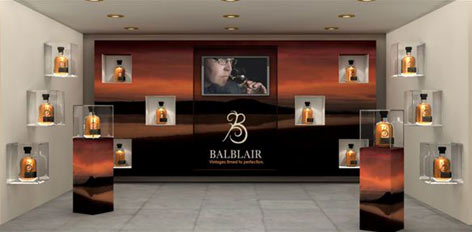
EliteMarket.com, an innovative and revolutionary luxury brand website, has launched their new Fine Malt Whisky Cellar. This offers the world's first ever virtual 3D platform to offer a fully immersive shopping environment in which users can access information and purchase some of the finest malt whisky brands on the market. The brands used in the launch are Balblair, Dalmore, Fettercairn and Old Pulteney, with more to join soon. We tried it out and it is great fun and very easy to use! To take your own tour of the EliteMarket Fine Malt Whisky Cellar and to make any purchases - click here. For further information on the EliteMarket and the other facets of luxury lifestyle that they cater for, please visit www.elitemarket.com.
elitemarket.com balblair malt cellar
Yamazaki - 1984 bottling wins highest accolade
A whisky from Japan's oldest whisky distillery has won the top prize at the International Spirits Challenge awards, held in London this week. Yamazaki, the Suntory owned distillery that was formed in 1923, entered their 1984 vintage whisky against 300 other whiskies from around the globe and walked off with first prize. The whisky then went on to win the Supreme Spirit Champion prize, which is awarded to the best spirit from across all the spirit categories. This makes it the first Japanese product to win either of the prestigious awards.

Thursday, November 11, 2010

New releases > Double Single by Compass Box

double single by compass boxModern day whisky innovators
Compass Box is a boutique independent whisky producer that was founded in 2000 by John Glaser and is based in London and Edinburgh. Their ethos is to buy whisky from a small number of distilleries and then craft them together into their own unique whiskies. The range includes single grain whiskies, vatted malts, blended whiskies such as this Double Single and other limited releases. All are produced and released in small batches, often using only two or three whiskies to create a unique product with a catchy name. By doing their own blending and vatting, Compass Box have less restrictions than traditional independent bottlers and as a result, is a former winner of the prestigious Whisky Magazine's Innovator of the Year.

A celebration bottling
The Double Single is a new bottling to celebrate the 10th anniversary of Compass Box. As the name suggests, it is made from two single casks - one single malt and one grain whisky - to make a unique new blended whisky. The single malt is from the Glen Elgin distillery in Speyside, which is located close to the city of Elgin (unsurprisingly!), and the grain whisky is from the Port Dundas distillery in Glasgow. The Glen Elgin is an 18 years old, is from a large ex-bourbon cask and forms approximately three quarters of the blend. The Port Dundas grain whisky is a 21 years old, also from an ex-bourbon cask.

The Double Single is a revival of a limited bottling that Compass Box produced for the famous Highlander Inn in Craigellachie, Speyside in 2003 and has an alcohol strength is 53.3% ABV. There are only 876 bottles available and they will be in specialist whisky retailers and can also be purchased from the Compass Box website for £99 each.

Our tasting notes
The colour is a pale lemon yellow and the nose is fresh, vibrant and very promising. Considering its apparent lightness, the whisky has an incredibly complex combination of aromas coming from the nose and these increase with time. There are notes of vanilla, green apple, nuts (think of a creamy type of nut like almond or hazelnut), wood shavings or sawdust, fresh coconut, dried grass, cereal grains, tangy kiwi fruit and a sharp whiff of alcohol spirit. On the palate this is light, delicate and elegant. The whisky is again very complex and refreshing with vanilla, honey, dry cereal grains and that woodiness (imagine pencil shavings) particularly prominent. There is also a distinct juicy citrus note (think of lemon juice), some dried grassiness and hints of fresh tropical fruits (that kiwi again plus some pineapple). The palate is delicious, juicy, tangy and fresh. The finish is short and vibrant with sweet vanilla and honey notes tempered by sharper citrus (lemon especially) and drier grassy and cereal notes.

What's the verdict?
The Double Single is a cracking whisky that is one of the best new whiskies of 2010 that we have tasted to date. Why? It offers an insight in to how good and complex a lighter whisky can be if sympathetically matured and blended. The price is high but it is a limited edition and a very good one at that. If you haven't tried any Compass Box whiskies before, then track one down and do so. They are, without exception, all unique and of a consistently high quality.

Wednesday, November 10, 2010

Have just tried > The Old Pulteney range

water jug and tasting glasses at pulteney distilleryOn our recent visit to the Pulteney distillery – the most northerly distillery on the Scottish mainland – we were lucky enough to sample some of the whiskies that are released, plus a couple of other special treats. The core range of Pulteney consists of a 12, 17, 21 and 30 years old. The whisky is sold as Old Pulteney and is known as ‘the maritime malt’, after its heritage, proximity to the sea and the distinct salty characteristics within it. Below are the tasting notes from the tasting, which was hosted by Malcolm Waring – the Pulteney Distillery Manager. To read our review of the distillery visit – click here.

The Old Pulteney brand has grown massively in the last three years and this has seen it climb into the top 20 for world sales of single malts. Worldwide sales grew by 16% alone in 2008 and this helps Old Pulteney head Inver House’s portfolio for sales (their other distilleries are at Balblair, Balmenach, Knockdhu and Speyburn). In addition to the core range, there is an expanding range of whiskies that are exclusive to the travel retail/Duty Free sector. These include the Isabella Fortuna WK499 (click here to read our review) and two 23 year old – one matured in ex-bourbon casks and one in ex-sherry casks.

Pulteney new make spirit
This sample of new make spirit was made earlier in the day and had an alcoholic strength of 68.6% ABV. The spirit is clear and extremely pungent and savoury on the nose with aromatic pear, cereals, leather, yeast, lemon zest and a slightly dirty sulphur note. It is rich and oily on the palate and it coats the inside of the mouth. The strength of the alcohol gives a spicy heat and this is joined by the elements from the nose, especially the green pear. The finish is long, fruity and robust with that dirty sulphur note returning.

old pulteney 12 years oldOld Pulteney 12 years old
We last reviewed this cornerstone of the Pulteney whisky range way back when we first started writing this blog, so we were interested to try it again. This is bottled at 40% ABV and matured in ex-bourbon casks. The colour is a vibrant gold and the nose has plenty of vanilla, honey, malty cereals and a whiff of salty brine. With time, add in some yeast and over ripe banana. On the palate, this feels oily and soft with plenty of vanilla, coconut, cereals and green apples. More flavours develop, such as some warm baking spices (think of cinnamon and nutmeg) and that banana from the nose (imagine banana cake especially). The finish is long and slightly sharp with a lemon zestiness and briny saltiness prominent.


old pulteney 17 years oldOld Pulteney 17 years old
This whisky is bottled at 46% ABV and is mostly matured in ex-bourbon casks with 10% matured in ex-Oloroso sherry casks. The colour is golden with a hint of amber and the nose is a delicious mix of vanilla, dried fruits (especially sultana), oak, cereals, a hint of liquorice and a whiff of salt. On the palate, this starts very softly and sweet with some cereal and honey prominent before becoming much more spicy. Vanilla especially comes through as does some nutmeg, liquorice and ginger. The finish is particularly dry with a lovely woody spiciness present (think of cinnamon bark) plus a slightly musty, earthy note which appears from somewhere. A salty tang is present but less pronounced than in the 12 years old.


old pulteney 21 years oldOld Pulteney 21 years old
This is also bottled at 46% ABV and has the highest percentage of sherry cask maturation of any Pulteney whisky in the core range (around 30% has been matured in ex-fino sherry casks here). The colour is golden amber and the nose is packed with lovely aromas - almonds, vanilla, oatcakes, crisp red apples and caramel (the combination of the last two is reminiscent of toffee apples). On the palate, this is drier than expected and is packed with oak, cinnamon and nutmeg notes. The fruitiness from the nose is present and joined by sultanas. Also present are almonds, vanilla, some burnt sugar and a hint of saltiness that cuts through the richness and increases with time. The finish is again dry and delicious, if not slightly short.


old pulteney 30 years oldOld Pulteney 30 years old
This has been matured in ex-bourbon casks, is bottled at 44% ABV and is the oldest and most expensive Pulteney single malt whisky ever released. To try it was a real treat. The colour is a dark gold and the nose is very promising. There are notes of vanilla, butterscotch, coconut, cereal biscuits, nuts (probably almonds?), yeast, banana and some soft dried fruits (think of sultanas and mango especially). On the palate, this is equally as complex with many of the notes present. It is soft and rich with a citrus zest note and the signature salty tang cutting through the richness. More of the banana and mango fruitiness come through with time, as does more vanilla. There is also just a pinch of cinnamon-like spice. The finish is shorter than expected and a little dry.

old pulteney 1990 peated caskOld Pulteney 1990 peated single cask
This whisky is only available at the distillery and you can bottle it straight from the cask yourself. It will cost you £80 a bottle and it has an alcohol strength of 57.4% ABV. This single cask is ex-bourbon and has previously held an unnamed peaty, smoky Islay whisky. The colour is golden with a brownish tint and the nose exhibits aromas of vanilla, honey and tropical fruits (imagine mango and banana). Surprisingly, there is little or no sign of any smokiness. This is not the case on the palate as the savoury bonfire-like smoke explodes on your tongue. The whisky is creamy with the vanilla, honey and fruit prominent again. It then becomes very sweet and sugary on the finish with a distinct saltiness making it mouthwatering and refreshing. Very interesting stuff.

What's the verdict?

The opportunity to taste a vertical range from a single distillery is a rare one, especially in the very place where it was produced and matured. This was a great experience and we thank Malcolm for his hospitality. The range is very solid - it contains some very good and under rated whiskies. The best selling 12 years old at its core and this would be a good whisky for a beginner who wanted to explore something a little different and at a decent price (approx. £25-30). The saltiness may put some off but they should be tried. Karen's favourite was the 21 years old and Matt's was the 17 years old, both of which are complex and very enjoyable whiskies.

Monday, November 8, 2010

Distillery visit > Pulteney

entrance to pulteney distilleryThe Pulteney distillery is the most northerly mainland distillery in Scotland. Located close to the harbour in the Highland fishing town of Wick, it lies just 15 miles south of John O'Groats – the northernmost point on the UK mainland. Pulteney is currently owned by Inver House Distillers, which are a part of the larger Thai Beverages group, and was founded in 1826 by James Henderson. It was named after Sir William Johnstone Pulteney, who was the biggest name in the herring fishing industry at the time.

Wick, or Pulteneytown as it was then known, was one of the major herring ports with over 1000 boats in its harbour at peak times and Henderson decided to open a distillery to give the fishermen a constant supply of whisky. It was located near to the harbour as the town was only accessible by sea in the 1820s. Sadly now, there were only about five or six boats in the harbour as we drove passed. The Pulteney distillery remains one of the few to be named after a person and its whisky is marketed as Old Pulteney or ‘the maritime malt’.

Up on arriving in the town of Wick, you cannot help but notice that almost everything seems grey, even on a lovely late autumn afternoon with the sun setting. This is due to the local dark slate-coloured stone that is used to construct nearly all of the town’s buildings. The Pulteney distillery is constructed in the same way and sits in a central location overlooking the harbour and the town. Both factors tend to make the initial impression of Pulteney that it is not the most picturesque of distilleries – there are no green trees or sweeping countryside in the background, no photogenic pagoda or pomp and circumstance for tourists – just grey buildings … in a street. However, we were to see and learn that what Pulteney lacks in the looks department, it makes up for everywhere else.

malcolm waring - pulteney distillery managerOur tour and subsequent whisky tasting session were hosted by Malcolm Waring, the Pulteney Distillery Manager (pictured, left). He started his whisky career at Pulteney over 20 years ago and has worked at all of Inver House’s distilleries, with the exception of Speyburn, working his way up through the ranks. He then went full circle and returned to Pulteney to become Distillery Manager in 2006. Throughout the tour and tasting Malcolm told us many facts about the distillery, which is clearly close to his heart, and we have tried to include as many of these below. We also discovered that he is learning to play the bagpipes and has started his own pig farm!

We begin in the entrance to the visitor centre, which has a homely feel and contains a small gift shop. The distillery receives approximately 4,500 visitors a year and they run a regular tour for £4 per person, plus Master Class and Whisky Connoisseur tours for £15 and £30 respectively . From here we go through a narrow hallway, which was adorned with maritime related paraphernalia (portholes on the wall, a wooden boat steering wheel etc) and play on the ‘maritime malt’ theme. The main part of the visitor centre is housed in an area that used to house the distillery kiln and cooperage. A basic exhibition shows old photographs, pieces of old equipment and explains each part of the whisky making process with text and easy to follow diagrams. The language of the exhibition is concise and perfect for a whisky beginner.

Malcolm gives us some interesting facts before we move on – the distillery is built on the site of an old quarry, it employs just 11 staff (eight distillery shift workers including himself, two in the shop and one in the office) and that the whisky is also know as ‘the manzanilla of the north’ because of its saltiness which is similar to that found in manzanilla sherry. We cross the central courtyard and go in to the mill room, which houses a 90 years old Porteus mill. This amazing and ancient piece of equipment mills down 5 tonnes of malted barley every two and a half hours. It gets through a staggering 160 tonnes in a 12 day cycle. Each tonne of milled barley (or grist) will produce 410 litres of alcohol spirit. The malted barley used has no peat included, although the distillery did use heavily peated malt and produce a robust, smoky style of whisky prior to 1959.

mash tun at pulteney distilleryNext is the mash room, which can be described in one word – tiny! The mash tun (pictured, left)fills the room and you have to squeeze around the sides of it to look in or move on. Malcolm explained that the mash tun is due to be replaced in two years time and that they would have to take the roof off to get this old one out and the new one in! He also told us that Pulteney use a four water cycle when mashing their grist and this involves adding water at four different temperatures – 68.5°C then 72°C, 85°C and 87°C - to try and extract the most soluble sugars possible. The capacity of the mash tun is 15,700 litres.

washbacks at pulteney distilleryAfter the claustrophobic mash room, we are taken through to the larger washback room where the fermentation process takes place. There are six washback tanks, each with a capacity of 23,500 litres, but true to Pulteney’s quirky nature the story doesn’t end there. Five are made from Corten steel, which is a rarely used material for washbacks these days (in fact, only Glen Scotia in Campbeltown still has them) and the other is stainless steel. Add to this that the five steel washbacks are in one room with the sixth stainless steel one is located in the still house and you start to get the idea of Pulteney’s unconventional layout.

In a further quirk, we discover that the distillery is one of only four in Scotland to use dried yeast for fermentation, rather than liquid yeast cultures – Malcolm naming Auchentoshan, Bruichladdich and Highland Park as the others. This yeast is purchased from South Africa. The impact of this is that Pulteney has a longer fermentation time than most, as it takes an additional two hours for the yeast to rehydrate and ‘get going’. This is done by adding the dried yeast pellets to warm water at 36°C. The total time for fermentation is 52 hours and each washback contains liquid at different stages of the fermentation process.

This place is a rabbit warren - we double back on ourselves through a narrow passageway and emerge in to what must be one of the smallest and most idiosyncratic still rooms in the industry. The initial response from us was "is this it?" but plenty of interest was soon revealed. The Pulteney still room has one pair of stills (one wash still and one spirit still), which are based on originals from the 1920s, and that sixth stainless steel fermentation washback crammed in the far corner. Both stills have unconventional elements to them, including the large bulbous parts below the neck (the unique design of Old Pulteney’s whisky bottles are influenced by this shape). This unusually large bulb shape helps to give their spirit its distinctive oily, heavy character.

pulteney distillery stills and wormtub
The wash still (pictured, above left) holds 21,000 litres of fermented wash. However, the most interesting thing is that the top of the neck has been crudely sliced off and a makeshift lyne arm welded to the side. The reason for this is rumoured to be that the measurements for a new still were confused and when it was delivered, it didn’t fit … so they hacked the top off and repositioned the lyne arm! They have kept the same design of still ever since the 1920s. The spirit still (pictured, above centre) is smaller, with a capacity of 17,000 litres and it too has a bizarre feature – a lyne arm that resembles a u-bend on a toilet and is unlike anything else in the industry. This is due to the purifier attached to it – when this was fitted, there wasn’t enough space to keep the lyne arm straight without smashing through the outer wall of the building. So, they adapted the lyne arm. We like and admire this type of ingenuity!

spirit safe at pulteney distilleryBoth of the stills run in to their own wormtubs, which are located on the outer wall of the still room (pictured, above right). These are huge water tanks in which coiled copper piping sits - as the spirit vapours travel down the lyne arm from the still, they travel through the coiled pipe and the cold water helps to condense the vapour back to a liquid. This was the traditional method for condensation but has now been largely replaced by modern condensing units at most distilleries. This made it very interesting to see and further enhanced the sense that Pulteney is very much a traditional distillery that has always made its whisky the same way. The last thing to see here was the padlocked spirit safe (pictured, left), which dates back to 1920, and it sits on top of the cast iron spirit receiver of the same age.

casks at pulteney distilleryThe final part of the tour takes us to one of the warehouses across the road, via the cask filling area. Here they undertake minor cask repairs before filling them with newly made spirit. At Pulteney they fill to cask at an alcoholic strength between 68-69% ABV. Today's ABV is 68.6%. Only spirit destined to become Old Pulteney single malt (approximately 2,000 casks a year at present) is stored and matured within their five warehouses on site. Another 1,000 or so casks are produced for the blending market. They currently have 25,000 casks maturing on site, which equates to 3.6 million litres of whisky. Most are in ex-bourbon casks, although some are in casks of various varieties of sherry. The most amazing thing about standing in that warehouse is that you can taste a tangy saltiness in the air - no wonder that Old Pulteney whiskies have that distinct saltiness as one of their main characteristics!

We moved on to taste the current range, plus a couple of special treats, with Malcolm back in the visitor centre. To read our tasting notes - click here. We would like to thank Malcolm for his hospitality and his fascinating insight in to this traditional yet idiosyncratic whisky distillery. Next time someone tells you “once you’ve seen one distillery, you’ve seen them all haven’t you?”, tell them to visit Pulteney and then ask if they have the same opinion!

Sunday, November 7, 2010

Competition > Win 5cl whisky samples

Last week, we joined a whisky bloggers trip to Scotland as guests of Inver House Distillers. We were taken to visit three of their distilleries - Balblair, Knockdhu and Old Pulteney - and our distillery profiles, whisky tasting notes and photos from the trip will be appearing over the forthcoming week or so. However, while we write and you read about our trip, we have decided that we would also like a lucky somebody to sample some the fine whiskies from these three Highland distilleries. As a result, we have a trio of 5cl bottles to give away - AnCnoc 12 years old, Balblair 1989 and Old Pulteney 12 years old.

We had this competition in mind before we went to Scotland but could not decide on the nature of it. However, one particular event that happened on the trip made it a 'no brainer' and led to a one-liner to end all one-liners (and there were a few top ones on that trip!). This became the centre of a conversation on the minibus where it was commented that, if taken out of context, this would be a very obscure and, if possible, even funnier. The whole group started discussing other funny one-liners that they had seen or heard, that when taken out of context didn't make any sense or made you sit up and think "What the ...?"

So our competition is - which one-liner or statement has made you sit up and think "what is that all about?" or "what happened to get to that conclusion?" It can be whisky related or not and may have been said or witnessed first hand by yourself, a friend or a colleague. Equally you may have seen a random text, Facebook status update or tweet on Twitter that didn't make any sense but made you wonder how or why someone had typed it. Also, let us know where you saw or heard it. We will choose our favourite on Friday 12 November and the winner will receive the three samples. Simple.

Our visit to Scotland > Autumn 2010

The last week has seen us being quiet on the blog and website, but we do have a good reason! We were invited to join a group of whisky bloggers on a whistle-stop two day tour to Scotland, as guests of Inver House Distillers. The itinerary was to take us from our comfort zone in London up to the far north of Scotland, starting at Old Pulteney in Wick and then driving down the north eastern coast of the Highlands to take in Balblair and through the Speyside region to Knockdhu (otherwise known as AnCnoc). It gave us the chance to visit three distilleries with very unique personalities, taste some great whiskies from each and finally put some names to faces from the non-London whisky blogging community. These included some of our favourite and 'must read' blogs.

Scotland Whisky Tour - Old Pulteney, Balblair and KnockdhuThe other bloggers on the trip were Chris and Lucas from Edinburgh Whisky, Jason of Guid Scotch Drink fame, Mark from Glasgow Whisky (& Ale), Keith from the Whisky Emporium, James the writer of Scotch Odyssey, Ben from Masters of Malt and Johan from Onversneden. We were also joined by Cathy from Inver House Distillers. We anticipate that all will be posting the events, distillery and tasting notes over the coming week, so be sure to check them out - especially the ones you may not have checked or read before.

After a night in a Japanese style pod-room in Yotel at Heathrow, we caught a flight to Edinburgh where we were to catch a connecting flight to Wick, the most northern (and possibly smallest, having now been there!) commercial airport on the UK mainland, at 11.00. Shortly after our arrival in Edinburgh at 09.15, the departure screen informed us that our Wick flight was delayed until 13.00. "Oh darn", we thought (or something slightly stronger). This turned out to be due to our 30-seater plane and staff being in the wrong place - the time changed to 14.20, back to 13.00 and then 14.20 again as we felt a touch of desperation set in on FlyBe/LoganAir's part! All of this as Lucas and Cathy waited up in Wick ...

However with hindsight, the delay was good on two counts - 1> it led to an impromptu group bonding session with the majority of our whisky blogging party and 2> the offer of a £5 lunch voucher from the somewhat sheepish airline. As the hours of wait whiled away, we learned lots about our fellow traveling companions, their backgrounds and what drove them to become part of the whisk(e)y blog community. Attention turned to how to get the most out of the free £5 voucher, with one suggestion that we pool all eight vouchers together to make one über food voucher of £40 and then buy a bottle of whisky from the Duty Free shop being particularly creative. Sadly, common sense and increasing hunger won.

Finally, they found us a plane, we were loaded on and the propellers started. It was 14.30. After a bumpy but gorgeous flight (especially the last part up the north east Highland coast as the sun began to set), we landed at Wick three and a half hours late. The airport 'terminal' resembled a doctor's surgery waiting room and had possibly the shortest baggage reclaim belt in the aviation industry - the rugged chap handing each passenger their bags through a hatch, having driven them the short distance from the plane on his red tractor! Cathy and Lucas were there to meet us, having been in Wick for hours, and we piled in to the minibus like an eager group of school kids on a trip. So, off we went to Old Pulteney ...

The reviews of our visits to Old Pulteney, Balblair and Knockdhu distilleries plus relevant tasting notes of the whiskies that we sampled, photos, accounts and stories that happened on the trip and a competition to win whisky samples from each place will follow in the coming week or so. We hope that you enjoy our posts and those of the companions on the trip.

Friday, November 5, 2010

Inbox > November 5, 2010

Inbox is a weekly round up of whisky news and PR type material that has found its way in to our email inbox. Sadly, we cannot write full articles or do justice to every piece that we receive, so Inbox has been born! It will feature items from around the world of whisky and will be published by us each Friday. Within Inbox we will write a couple of lines about each press release/piece of news/PR event that we have received and provide links, where possible, for you to find out further information if you want to. So grab a dram and we hope that you enjoy ...
______________________________________________________________
Deanston – new whisky launched
The Highland distillery, currently owned by Burn Stewart Distillers, has announced a new whisky to sit alongside the existing Deanston 12 years old. This is called Deanston Virgin Oak and is finished in new American oak casks from Kentucky USA and is bottled at 46.3% ABV. The packaging will be closer to the other recently re-launched Burn Stewart single malts – the Bunnahabhain 12 years old, Ledaig and Tobermory 10 years old – than the current Deanston.

Scotch Malt Whisky Society - chance of a lifetime!
The famous whisky society has announced a once in a lifetime chance to win the contents of one of their single casks. It is open to UK members only. The whisky in question is a cask of 48.21 (number 48 in their numerical system is rumoured to be Balmenach distillery), that has developed a leak. In a bid to save some of the precious whisky they have bottled the remaining liquid, giving just 37 bottles in total. For the chance to win all 37 bottles, members only have to buy a 70cl bottle from their collection before 13 December - they will then be entered autromatically in to the prize draw! For further information, check out this article from the great Whisky Intelligence site or by going direct to The Society's website at www.smws.com.

Whisky For Movember
It’s November, so that means it is again time for Whisky For Movember - the official UK charity that raises money during the course of November by growing moustaches (or a 'mo' - get it?) for the whole month. The group is made up of people from across the whisky industry - writers, bloggers and drinkers. For more details or to donate can be found at www.whisky4movember.com or on Twitter @whisky4movember. Whisky For Movember is part of the larger Movember charity group, which was started in Australia. Movember aims to raise awareness and money for a series of male health issues, primarily The Prostate Cancer Charity. For further details or to donate to Movember, then check out www.movember.com.

The Whisky Round Table - November 2010

The latest edition of The Whisky Round Table is now available for all to read. The subject of this month's meeting is whisky festivals and what makes one good or bad. The host this month is Mark Connolly, who writes the Glasgow Whisky (and Ale) blog, plus he also runs the Whisky Whisky Whisky forum and is co-staging his own whisky festival this month. Busy chap, huh? We are delighted to be one of the founder members of The Whisky Round Table, so hope that you will join us and our colleagues for this edition. To read the November sitting of the Whisky Round Table - click here.

The Whisky Round Table is the brainchild of Jason Johnston-Yellin, who is the author of the 'must read' whisky blog Guid Scotch Drink. His idea was to gather together 12 whisky bloggers from around the world and get them to discuss a whisky topic once a month. The hosting of The Round Table is passed around the 12 members, with each host setting the question for each month. The November edition is the sixth offering and the hosting half way point for The Round Table and the subjects have been wide and varied to date. Links to the other five articles can be found by clicking here.

Sunday, October 31, 2010

New releases > Diageo Special Releases 2010 Part 2

Diageo, the world's leading premium drinks company, have just released their latest cask strength single malt whisky range. The Special Release series began in 2001 and the selected bottlings are released annually, around this time of the year. The idea is to showcase special stock that they are holding from their existing and closed Scottish distilleries. This years selection is made up of nine single malt scotch whiskies, with all limited in numbers and are highly collectable and desirable as a result. They will only be able to be purchased from specialist retailers and in selected markets around the world.

We at Whisky For Everyone were lucky enough to get an invite to the official launch and tasting of the Special Releases that was recently held at Diageo's headquarters in London. We will present our tasting notes from the evening in two parts. To read the first part, including the Auchroisk 20 years old, Brora 30 years old, Glen Spey 21 years old and Talisker 30 years old - click here.
___________________________________________________________
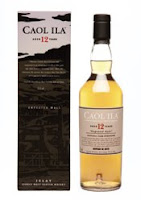
caol ila 12 years old 'unpeated'Caol Ila 12 years old Unpeated
Info > 57.6% ABV - 6000 bottles - Matured in ex-bourbon casks - RRP £52
The Caol Ila distillery (pronounced cowl-ee-la) is located on the north eastern shores of Islay, the famous whisky island off Scotland's west coast. Islay is well known for producing the peaty, smoky style of whisky and Caol Ila is no exception. Well, except this bottling! Caol Ila produce an unpeated non-smoky spirit for roughly two weeks a year and release this in limited batches. Caol Ila was founded in 1846 and is the largest distillery on Islay, producing 5.8 million litres per year.

The colour is pale gold and the nose is fresh and vibrant. There are notes of vanilla, toffee and malty cereal grains (think of oatcakes), with the freshness coming from a combination of aromas, including salty brine, citrus zest, something floral (imagine honeysuckle) and a whiff of surgical spirit or bandages. The palate is light and zingy with the fresh notes from the nose appearing first, especially the zest and the honeysuckle. Then the saltiness comes, followed by the vanilla, toffee and cereal characters. Some additional green apple and a chalky, almost mineral note finish things off. Upon adding water, the whisky becomes creamier and more buttery in the mouth and some of the zingy, zesty notes are lost. The finish is clean and refreshing with that warming, medicinal touch of surgical spirit putting in a pleasant return towards the end.

cragganmore 21 years oldCragganmore 21 years old
Info > 56% ABV - 6000 bottles - Matured in ex-bourbon refill casks - RRP £135
Cragganmore is a distillery which is located in the heart of the Speyside region, close to the village of Ballindalloch. It was founded in 1869 and has a current production capacity of 2 million litres. Cragganmore has long been the Speyside representative in Diageo's Classic Malts - a range in which they have selected their definitive whisky from each region of Scotland. Despite this, Cragganmore is one of the least known single malts in the range. Sales are growing and a decent majority of whisky also goes in to blends, such as Old Parr and White Horse. Older expressions, such as this one, are rare.

The colour is a rich gold and the nose is packed with vanilla and oak. Added to this are notes of nuts (think of coconut and toasted almonds), malty cereals, shortbread biscuits, honey and a whiff of spice (imagine cinnamon bark). The palate is rich and tangy, with a lovely freshness. There are immediate notes of wood spices like cedarwood and cinnamon, more vanilla, honey, buttery biscuits (probably that shortbread again), oats and some fiery ginger. There is also a sharp tang of citrus (especially lemon) and further woody notes that dry the sweetness out and are reminiscent of wood shavings. The finish is warming, is of decent length and is a little bittersweet. It begins with honey and vanilla, before the wood and spice notes pile in to give a rasping, fiery ending.
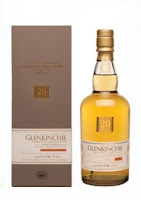
glenkinchie 20 years oldGlenkinchie 20 years old
Info > 55.1% ABV - 6000 bottles - Matured in ex-bourbon refill casks - RRP £125
Glenkinchie, like Cragganmore, is one of Diageo's Classic Malts, this time representing the Lowlands region in the range. The distillery is located in the town of Pencaitland, which is a short drive from Edinburgh and makes it a popular spot for tourists. It was founded in 1837 and has a current production capacity of 2.3 million litres per year. The popularity of Glenkinchie's single malts are rowing as a result and older versions, such as this, are rare so we were looking forward to sampling it.

The colour is pale yellow gold and the nose is initially sharp, fresh and clean. With time, this settles down to reveal a highly perfumed and slightly unusual nose - it is a mix of floral notes (think of rose petals and honeysuckle) and tropical fruits (imagine mango and peach). These are joined by more traditional ex-bourbon cask aromas of vanilla, honey and oak, with a distinct grainy note also coming through. On the palate, it is again fresh with the floral and tropical notes present, along with some fresh green fruits (pear and apple especially). The vanilla, honey and oak notes combine with coconut and cereals well. The addition of water brings out the cereal character further and a dried grass herbal note appears to add dryness. The finish is short and sweet, getting drier towards the end.
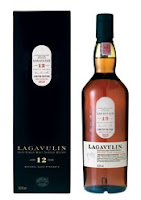
lagavulin 12 years oldLagavulin 12 years old
Info > 56.5% ABV - Limited quantity of bottles, no exact figure released - Matured in ex-bourbon refill casks - RRP £59
Lagavulin (pronounce laga-voo-lin) is located on the south eastern corner of the famous whisky island of Islay. It is one of the most highly regarded distilleries for the production of the heavily peated, smoky style of whisky. The distillery was founded in 1816 and has a current annual production capacity of 2.2 million litres. Lagavulin single malts are highly sought after and it is the Islay representative in the Classic Malts series. It is occasionally used in blending, especially in the popular White Horse.

The colour is a light gold and the nose hits you in the face with a complex mix of aromas - toffee, burnt sugar, vanilla, malty cereals, a hint of salty brine, earthy smoke (think of damp moss and wet soil), honey and a whiff of parma violet sweets (those purple hard sweets that you had as a child). The palate is equally as complex and initially very sweet, with the honey and vanilla to the fore. Then comes an interesting fruitiness that is reminiscent of plums, and a hint of zingy lemon zest. Finally comes a touch of salt and that famous Lagavulin smokiness, which is more ashy and bonfire-like than on the nose. The finish goes on for ages with notes of burnt sugar and cereals mixing with the increasing peat smoke and a dash of bitter iodine.
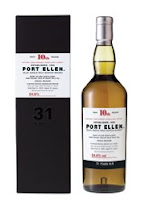
port ellen 31 years oldPort Ellen 31 years old
Info > 54.6% ABV - 3000 bottles - Matured in both ex-bourbon and ex-sherry casks - RRP £250
The Port Ellen distillery has been closed since 1983, making its whisky very rare and highly desirable. Diageo currently limit the release to this annual Special Release and as a result the price is high and they sell quickly. Releases through independent bottlers are more common but still limited and pricey. The distillery was located on the island of Islay and was founded in 1825. The floor maltings are still used to produce much of the island's peaty malted barley, but the distillery has laid dormant since it closed.

This whisky is amber in colour and the nose is surprisingly fresh and lively for something of this age. The smoke immediately hits and is woody and ash-like in nature. Then other aromas start to appear - sweet caramel, cereal husks, shortbread biscuits, some waxy furniture polish, vanilla and a whiff of salty sea air. The smokiness gets a medicinal antiseptic quality with time. On the palate, there is initial honey and caramel sweetness, with more coming from the vanilla and distinct cereal notes. The smokiness creates a bitter edge, almost acrid, and is distinctly ashy and reminiscent of burning embers. The finish is long and smoky, becoming more antiseptic and bitter with time. Vanilla, some burnt caramel and a herbal note (think of dried grass) mix with a pleasant saltiness to create a complex and enjoyable dram.

This year's Special Releases selection is very consistent across the board. All of the whiskies are good and the selection covers all the different styles and flavour profiles. They have chosen whiskies from well known and popular distilleries and mingled these with rare and lesser known ones. Our personal favourites are > Karen - Glenkinchie 2o years old, Matt - Talisker 30 years old.